How to Understand the Chlorine Dioxide Formula?
Understanding the chlorine dioxide formula begins with a small but important detail: ClO₂ contains one chlorine atom and two oxygen atoms. This structure does not make it “chlorine water.” It describes a reactive oxidizing compound with different chemistry, behavior, and by-products.
The World Health Organization identifies chlorine dioxide as a powerful oxidant and disinfectant in its Guidelines for Drinking-water Quality. The U.S. Environmental Protection Agency sets a maximum residual disinfectant level of 0.8 mg/L for chlorine dioxide in public drinking water. EPA also regulates chlorite at 1.0 mg/L, showing why chemical control matters. Numbers matter here.
Dr. Joseph A. Cotruvo, a recognized drinking-water treatment expert, has stated, “Chlorine dioxide is a powerful oxidant and disinfectant.” His observation supports a practical reading of the chlorine dioxide formula: the formula explains composition, but not safe application. Concentration, contact time, temperature, water quality, and by-product formation must also be examined. The International Water Association and WHO technical reports repeatedly emphasize this broader treatment context.
A formula is only the beginning.
This article will explain the molecular structure of ClO₂, its oxidation behavior, and its distinction from chlorine-based disinfectants. It will also examine why chlorite and chlorate deserve attention during treatment assessment. Some explanations oversimplify the subject. That is a weakness worth admitting. Chemistry can look neat on paper, while real water contains organic matter, minerals, and changing conditions. Reliable interpretation therefore requires verified data, qualified professionals, and compliance with local drinking-water standards.
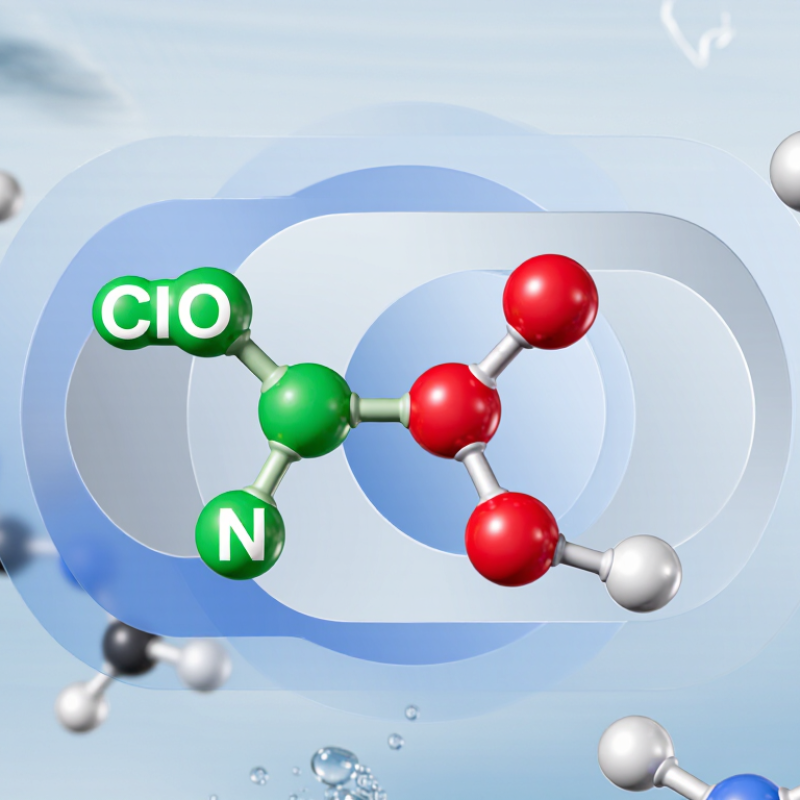
What the Chemical Formula of Chlorine Dioxide Represents
Chlorine dioxide is represented by the formula ClO2. This compact formula shows one chlorine atom joined with two oxygen atoms. It describes a single molecule, not a mixture or a solution. The molecule is electrically neutral overall. However, the formula does not explain every chemical property. It cannot show the molecule’s bent shape, electron arrangement, or strong oxidizing behavior. A simple formula can hide important details.
In chemistry, chlorine usually has a formal oxidation state of plus four in ClO2. This number helps researchers track electron changes during reactions. It is not a complete description of the molecule’s real electron distribution. ClO2 also contains an unpaired electron, making it a reactive radical. In a laboratory setting, its color and odor may provide clues, but observation alone is unreliable. My first instinct might be to treat the formula like a full map. It is not.
Tips: Read ClO2 as a particle count, not a performance guarantee. Check whether the source means pure gas, dissolved material, or a reaction mixture. Keep the subscript 2 visible; changing it changes the substance. Use trusted chemical references and trained supervision when studying its properties. Small notation errors matter.
How Chlorine and Oxygen Combine in Chlorine Dioxide
How to Understand the Chlorine Dioxide Formula?
Understanding chlorine dioxide starts with its formula: ClO2. The symbol shows one chlorine atom joined to two oxygen atoms. This ratio is the core idea, not a recipe. Chlorine contributes seven valence electrons, while each oxygen contributes six. Together, the molecule has 19 valence electrons. That odd number matters. It makes chlorine dioxide a reactive radical with a bent molecular shape. Textbook diagrams can hide this complexity.
In the molecule, chlorine sits between two oxygen atoms. However, the bonds are not ordinary single bonds. Chemists describe electron density as delocalized across the O–Cl–O structure. Chlorine commonly has a +4 oxidation state here. Oxidation numbers are accounting tools, not physical charges. This distinction is easy to miss. It helps explain why chlorine dioxide can accept electrons during oxidation reactions. The gas appears yellow-green and has a sharp odor, but appearance is not a reliable safety test.
The 2022 World Health Organization Guidelines for Drinking-water Quality list 0.3 mg/L for chlorine dioxide in drinking water. The same guidance discusses chlorite and chlorate, showing why by-products require monitoring. Professional water-treatment reports also examine residual levels, contact time, pH, and organic matter. Formula alone cannot predict practical performance. That limitation deserves attention. Small changes in water chemistry can shift the result.
How to Understand the Chlorine Dioxide Formula? - How Chlorine and Oxygen Combine in Chlorine Dioxide
| Data Dimension |
Chlorine Dioxide Information |
How to Interpret It |
| Chemical formula |
ClO2 |
One chlorine atom is combined with two oxygen atoms in each molecule. |
| Elements present |
Chlorine (Cl) and oxygen (O) |
The formula contains two different chemical elements. |
| Atomic ratio |
Cl : O = 1 : 2 |
For every chlorine atom, there are two oxygen atoms. |
| Molar mass |
67.45 g/mol |
The approximate mass of one mole of ClO2 molecules. |
| Valence electrons |
19 electrons |
Chlorine contributes 7 and two oxygen atoms contribute 12, giving an odd-electron molecule. |
| Molecular classification |
Neutral molecular compound |
ClO2 is a covalent molecule rather than an ionic formula unit. |
| Oxidation states |
Oxygen is usually −2; chlorine has an average oxidation state of +4 |
The total oxidation-state sum for a neutral ClO2 molecule is zero. |
| Lewis-structure feature |
An odd-electron species with resonance descriptions |
The unpaired electron means a simple octet-only Lewis structure does not fully describe the molecule. |
| Molecular geometry |
Bent or angular |
The oxygen–chlorine–oxygen arrangement is not linear because of electron-pair repulsion around chlorine. |
| O–Cl–O bond angle |
Approximately 117.6° |
This angle supports the bent molecular shape. |
| Magnetic behavior |
Paramagnetic |
The molecule is attracted to a magnetic field because it contains an unpaired electron. |
| Physical state near room temperature |
Gas |
Chlorine dioxide has a boiling point close to room temperature, so it is gaseous under ordinary conditions. |
| Color |
Yellow-green gas |
The visible color is associated with the way ClO2 absorbs and interacts with light. |
| Melting point |
Approximately −59°C |
Below this temperature, chlorine dioxide changes from a liquid or gas to a solid. |
| Boiling point |
Approximately 11°C |
At approximately 1 atmosphere, ClO2 changes from liquid to gas near this temperature. |
| Chemical stability |
Reactive and capable of decomposing |
Concentrated chlorine dioxide can decompose rapidly, especially when exposed to heat, light, or contamination. |
| Safety characteristic |
Strong oxidizing substance |
It can promote oxidation and must be handled under controlled, professional safety procedures. |
Understanding the Molecular Structure of ClO₂
Chlorine dioxide, written as ClO₂, contains one chlorine atom bonded to two oxygen atoms. Its molecular structure is bent, not linear. This shape comes from electron repulsion around the central chlorine atom. The oxygen atoms sit at an angle, creating an uneven distribution of charge.
ClO₂ is an unusual molecule because it has an unpaired electron. Chemists describe it as a radical, and that feature helps explain its strong reactivity. Its bonds are often represented with resonance structures, although these drawings simplify the real electron distribution. The chlorine atom has a formal oxidation state of +4. However, formal charges do not tell the whole story. Measured bond lengths and spectroscopic data provide a more reliable picture. The molecule is also paramagnetic, meaning it responds to a magnetic field.
Tips: When studying ClO₂, sketch its bent geometry before examining bonding. Count valence electrons carefully. Do not force the molecule into a simple octet model. That approach can mislead beginners. Compare Lewis structures with experimental evidence, such as spectroscopy and molecular geometry. A small correction matters here: chlorine dioxide is not just “chlorine plus oxygen.” Its unpaired electron changes both its behavior and its interpretation.
Why Chlorine Dioxide Has Distinctive Chemical Properties
How to Understand the Chlorine Dioxide Formula?
Chlorine dioxide has the formula ClO2. It contains one chlorine atom and two oxygen atoms. However, the formula does not explain everything. Its unpaired electron makes chlorine dioxide a reactive radical with distinctive chemical behavior. This structure also gives it paramagnetic properties, which differ from many familiar disinfecting compounds.
Chlorine dioxide is usually recognized as a yellow-green gas at low concentrations. It dissolves in water, but it does not behave like ordinary dissolved chlorine. It can transfer oxygen during oxidation reactions, which explains its strong reactivity with many organic substances and reducing agents. Light and heat can accelerate its decomposition. A common mistake is assuming that a simple formula means simple handling. That shortcut is understandable, but incomplete. Reliable evaluation should include concentration, temperature, light exposure, and validated laboratory measurements. Safety data and professional supervision matter.
Tips: Treat ClO2 as a powerful oxidizer. Never judge safety by odor or color. Use suitable ventilation and approved protective equipment. Keep chemical information current, because real behavior can change with impurities and storage conditions. Even experienced users should pause and check the data.
Understanding the Chlorine Dioxide Formula: Why ClO₂ Has Distinctive Chemical Properties
Chlorine dioxide has the formula ClO₂, meaning that each molecule contains one chlorine atom and two oxygen atoms. Using standard atomic weights, chlorine contributes 35.45 g/mol and the two oxygen atoms contribute 32.00 g/mol, giving chlorine dioxide a molar mass of approximately 67.45 g/mol. Its odd-electron structure makes it a paramagnetic molecule and contributes to its strong oxidizing behavior.
How the Formula Relates to Chlorine Dioxide’s Uses
Chlorine dioxide has a simple formula: ClO₂. One chlorine atom bonds with two oxygen atoms. This structure explains its strong oxidation behavior. It can disrupt odor-causing compounds, pigments, and microorganisms. However, the formula alone does not explain every practical result.
In drinking-water treatment, chlorine dioxide is used as a disinfectant and taste-control agent. The World Health Organization’s Guidelines for Drinking-water Quality lists 0.3 mg/L as its guideline value for chlorine dioxide. The U.S. Environmental Protection Agency sets a maximum residual disinfectant level of 0.8 mg/L. These figures show why dosage control matters. More is not automatically better.
The same chemistry supports wastewater treatment and pulp bleaching. In a treatment facility, operators may monitor oxidation performance, residual levels, and by-products such as chlorite. The EPA sets a 1.0 mg/L maximum contaminant level for chlorite in drinking water. Small changes in water chemistry can affect results. This detail is often overlooked. Temperature, organic content, and contact conditions also matter. A formula gives the starting point, not the full operating picture. Industry reports and regulatory data remain essential for responsible decisions.