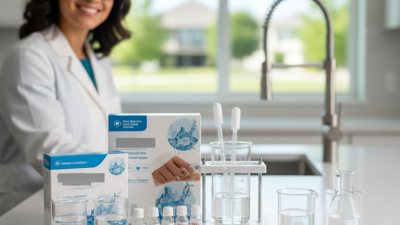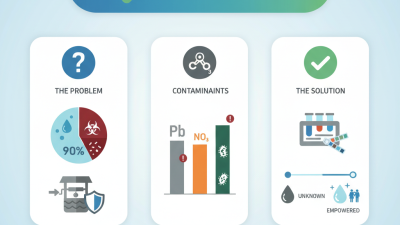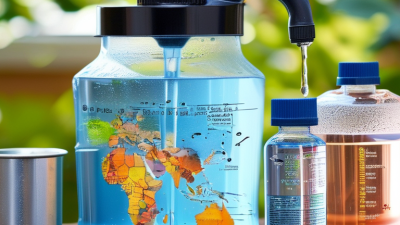

A water quality test kit can turn uncertainty into useful evidence, but only when its tests match the water source and the concern. A kit for municipal tap water may not suit a private well, aquarium, or pool. Dr. Shane Snyder, a water-quality researcher, has studied how contaminants affect water and public health. A practical paraphrase of his research is: “Choose a test that answers the question you actually have.” This is a summary, not a verbatim quotation.
The details matter. A clear strip can change color within seconds, while a lab sample may need careful collection and several days. Some kits screen for pH, hardness, and chlorine; others measure metals, bacteria, or nitrates. No kit checks everything. That limitation is easy to overlook. This guide presents 10 tips for choosing a water quality test kit, including how to compare test range, detection limits, instructions, and result reliability. It also explains when a home test is a sensible first check and when laboratory analysis may be more appropriate. Read the label closely. Check what the kit measures, how results are interpreted, and whether replacement reagents are available. A low price can be attractive, but unclear instructions or expired strips can make results hard to trust. Even a careful test cannot promise perfect certainty. It can, however, help you make a better-informed next decision.
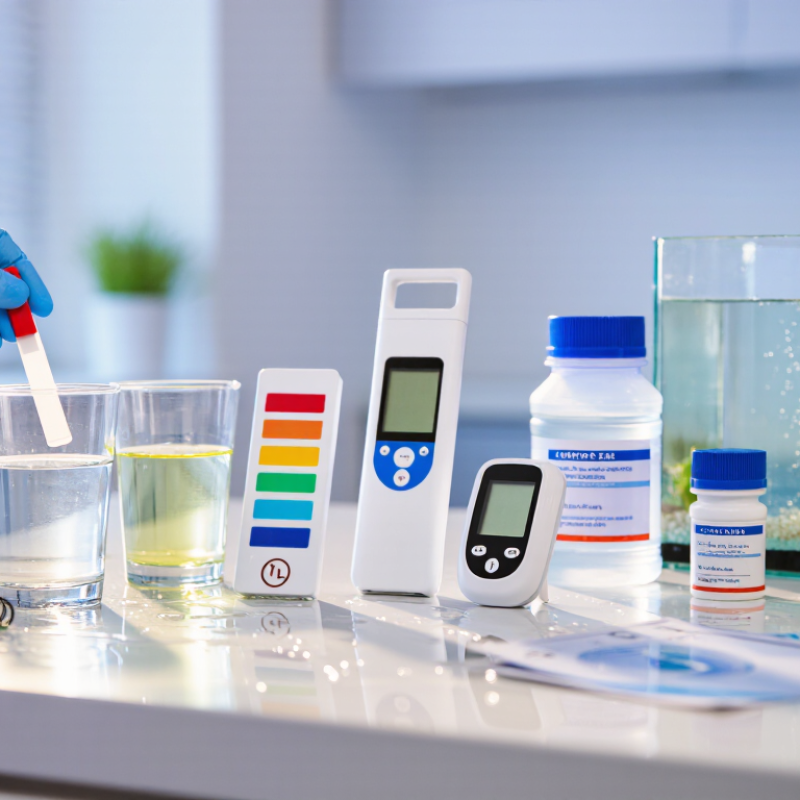
Choosing a water test kit starts with identifying the water source, not the kit. Municipal water, private wells, rainwater tanks, and surface water carry different risks. A kitchen tap may also reflect plumbing materials, not only treatment quality. In practice, this distinction is easy to overlook.
The WHO/UNICEF Joint Monitoring Programme reported that 2.2 billion people lacked safely managed drinking water in 2022. That figure shows why source-specific testing matters. For private wells, consider bacteria, nitrate, arsenic, and lead. The WHO Guidelines for Drinking-water Quality set a provisional arsenic guideline of 0.01 mg/L. Agricultural areas may require nitrate testing. Older buildings may justify lead and copper testing. Surface water needs broader screening, including microbial contamination and turbidity.
Tip: Write down the source, collection point, plumbing age, nearby farms, fuel storage, and recent flooding. Then match contaminants to those details. Choose a kit with clear detection limits and sampling instructions. A color strip can provide a warning, but it cannot replace laboratory confirmation. The U.S. EPA advises using certified laboratories for reliable drinking-water analysis. Test during normal conditions, and repeat after repairs, floods, or unusual taste and odor. Do not treat one convenient result as the whole truth. I still find this step tempting. Water changes. Your testing plan should, too.
Choosing a water quality test kit starts with one question: What decision must the result support?
The WHO/UNICEF Joint Monitoring Programme reported that 2.2 billion people lacked safely managed drinking water in 2022 (JMP, 2023). That scale makes convenient testing useful, but convenience is not proof. Color strips are fast and inexpensive. They usually provide broad ranges, so small changes can disappear. Digital meters offer numerical readings, yet calibration, temperature, and dirty probes can distort results.
Compare methods against the contaminant. For chlorine, colorimetric tests can show low residuals clearly; for pH, an electronic meter may offer finer resolution. Turbidity needs a dedicated optical method, not a visual guess beside a kitchen window. The US EPA’s approved drinking-water methods emphasize defined detection limits and quality controls (EPA, 2023). Look for a stated detection limit, reporting range, and uncertainty. A result below the range does not mean “zero.”
Kit types should also match the sampling location. A household screening kit may suit a private well, while field teams need blanks, duplicates, and documented sample handling. The WHO Guidelines for Drinking-water Quality recommend risk-based monitoring rather than relying on one isolated result (WHO, 2022). I would repeat a surprising result with a fresh sample. That sounds obvious. It is often skipped. Check expiration dates, reagent storage, and reading time; a blue color viewed thirty seconds late can mislead. When results approach a regulatory limit, laboratory confirmation is safer, even if the kit seemed accurate yesterday.
Typical working ranges for free chlorine testing by method
Detection range is one of the most important factors when selecting a water quality test kit. Colorimetric tests are commonly used for low-to-medium chlorine concentrations, test strips provide quick screening, electrochemical sensors offer broad ranges with fast readings, and titration is better suited to higher chlorine levels. Actual ranges vary by reagent formulation, sample conditions, calibration, and instrument design.
Accuracy should be judged beyond attractive packaging. Check whether the kit measures the contaminants relevant to your water source. A private well may need nitrate, bacteria, arsenic, or lead testing. Municipal water may require different checks.
Look for detection limits, stated tolerances, and clear sampling instructions. A result that says “safe” without a measurement range deserves caution.
Certifications can support credibility, but they do not guarantee perfect results. Look for independent laboratory validation, documented calibration, and standards such as ISO/IEC 17025 where applicable. Confirm that the certification covers the specific test, not merely the manufacturing facility.
Check expiration dates and storage conditions. Heat, moisture, and sunlight can damage reagents. One overlooked detail can distort the reading.
Ease of use matters during real testing. A useful kit should provide clean containers, timed steps, readable color comparisons, and instructions written in plain language. Digital meters should explain calibration and error codes.
Test the same sample twice when results seem unusual. Small differences may come from timing or poor mixing. I still find color charts difficult under yellow kitchen lights. Natural daylight is better, although it is not always available.
Keep a simple record of the date, water source, result, and test conditions. This makes later professional verification far more meaningful.
A water test kit’s price is only the starting point. Check whether it covers the contaminants you actually need, and whether shipping, lab analysis, or a follow-up test costs extra. The USGS’s 2016 national assessment found that roughly one in five sampled private wells had at least one contaminant above a health benchmark. A broad panel may therefore be worth comparing with a cheaper, narrower kit. Cheap can become costly.
Read the supply list before buying. Some kits include sterile bottles, gloves, preservatives, and a prepaid mailer; others expect you to source items yourself. Collection details matter: a bottle touched inside the cap can compromise a sample. The EPA recommends annual testing of private wells for coliform bacteria, nitrates, total dissolved solids, and pH. Make sure the kit’s analytes match your water source and concerns, rather than paying for a panel that misses the basics.
Time matters, too. A home strip can give a quick screening result, while a mailed laboratory test may take days or longer. Check the lab’s stated turnaround, shipping schedule, and process for delayed or inconclusive samples. Ask whether results explain units and health benchmarks, not just red or green indicators. I would still verify an unexpected result with a qualified lab; one test is a snapshot, not a perfect verdict.
A useful water test kit starts with your household, not the longest list of tests. Note your water source: municipal water, a private well, or a shared building supply. Then consider what prompted your search. A metallic taste, cloudy water, or an old plumbing system may point to different questions. Don’t guess too quickly. Taste and appearance cannot confirm what is in water.
Check which substances the kit measures and whether its range suits your concern. Some kits focus on hardness, chlorine, or pH; others include tests for lead, nitrates, or bacteria. If you rely on a well, your local health department may recommend specific tests. For a rental home, ask whether the building has recent results. One kit rarely answers every question.
Ease of use matters on a busy evening. Look for clear instructions, readable color charts, and enough tests for more than one sample. Tiny color differences can be hard to judge under warm kitchen lights. That detail is easy to overlook. Also check the kit’s storage limits and expiration date, since old or poorly stored materials may produce less dependable results. If a result is unexpected, repeat the test carefully or use a certified laboratory for confirmation. A home kit is helpful, but it has limits.