

Top 10 Types of pH Meter for Water Buyers Should Know
Choosing the right ph meter for water is not simply a matter of selecting the highest advertised accuracy. Water buyers face different testing conditions, from clear drinking water to muddy ponds, cooling systems, aquariums, and wastewater.
Each application can require a different instrument. Pocket meters are convenient for quick checks. Handheld meters suit field inspections. Benchtop models support controlled laboratory work. Inline meters monitor water continuously, while portable multiparameter devices measure pH alongside conductivity, temperature, or dissolved oxygen. The best choice depends on sample type, testing frequency, required precision, and maintenance capacity.
Real testing can be less predictable than product descriptions suggest. A meter may perform well in clean water but respond slowly in samples containing oil, suspended solids, or biological material. Calibration matters. So does electrode storage. Even temperature compensation has limits. No meter is perfect.
This guide examines ten important pH meter types for water buyers. It considers accuracy, sensor design, measurement range, durability, calibration procedures, display functions, and long-term operating costs. It also explains where each type works best and where it may disappoint. A low-cost pocket meter can be excellent for routine checks. It may be unsuitable for compliance-focused laboratory testing. Likewise, an advanced inline system can reduce manual work but require professional installation and regular servicing.
Reliable purchasing decisions come from matching the instrument to real water conditions. A bright screen is useful. A stable reading is more important. Calibration records, manufacturer documentation, and replaceable electrodes deserve careful attention before purchase.
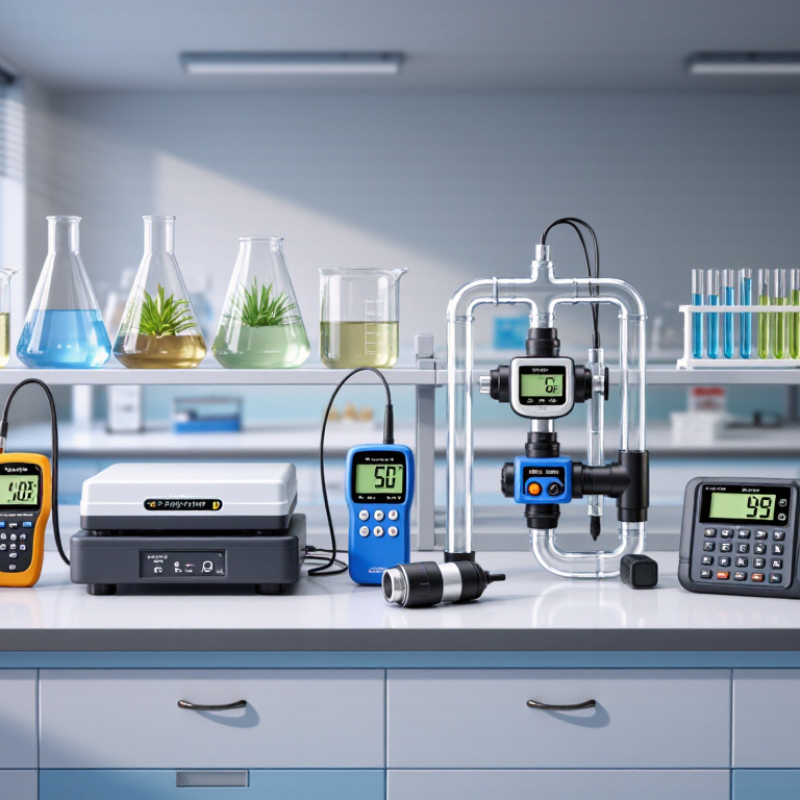
pH Measurement Standards: ISO 10523 and ASTM D1293 for Water Testing
Choosing among the top 10 types of pH meters for water testing starts with the measurement standard, not the screen size. ISO 10523 specifies the electrometric determination of pH in water and wastewater. ASTM D1293 provides standardized test methods for measuring pH in water. Neither standard approves a particular meter. They define how samples, electrodes, calibration, temperature, and reporting should be controlled.
A field meter suits intake points, tanks, and remote wells. A benchtop meter offers stronger control in laboratories. Buyers should check whether the instrument supports at least two-point calibration and automatic temperature compensation. Use fresh buffer solutions, rinse the electrode with purified water, and blot it gently. Do not wipe the glass bulb. Record sample temperature and measurement time. Small details matter.
For low-conductivity water, electrode selection becomes critical. Unstable readings may reflect poor contact, contamination, or carbon dioxide absorption. A stirring plate can help, but excessive stirring may change the sample. ISO 10523 and ASTM D1293 do not remove the need for technical judgment. That part is easy to underestimate. A meter can display two decimals and still produce a weak result. Buyers should review calibration logs, electrode maintenance procedures, and verification checks before comparing models. A documented process often matters more than extra features.
| Rank | pH Meter Type | Typical pH Range | Typical Accuracy | Best-Suited Water Applications | Main Advantages | Important Limitations | Standard Testing Considerations |
|---|---|---|---|---|---|---|---|
| 1 | Laboratory Benchtop pH Meter | 0 to 14 pH; some systems support approximately -2 to 20 pH | Typically ±0.001 to ±0.01 pH, depending on the electrode and calibration | Drinking-water laboratories, wastewater laboratories, research, quality control, and compliance testing | High resolution, stable readings, temperature compensation, data logging, and support for replaceable electrodes | Not designed for field use; requires a clean, stable workspace and regular electrode maintenance | Generally the strongest choice for controlled testing under ISO 10523 or ASTM D1293, when the electrode, calibration, temperature control, and reporting procedures meet the selected method |
| 2 | Portable Handheld pH Meter | Usually 0 to 14 pH | Typically ±0.01 to ±0.02 pH | Field sampling, treatment plants, reservoirs, rivers, lakes, aquaculture, and on-site water inspections | Portable, battery-powered, rugged, and often equipped with automatic temperature compensation and waterproof housing | Field conditions, sample temperature changes, dirty electrodes, and limited stabilization time can reduce accuracy | Suitable for field implementation of water pH procedures when the instrument is calibrated with traceable buffers and measurements are documented at the required temperature |
| 3 | Pocket pH Tester | Commonly 0 to 14 pH | Typically ±0.05 to ±0.1 pH | Quick checks of drinking water, pools, hydroponics, cooling water, and basic process-water screening | Low cost, compact size, simple operation, and convenient one-handed sampling | Small electrodes may have shorter service lives; limited stability, calibration control, and sample-temperature performance | Useful for screening, but buyers should verify whether the model's documented performance is adequate for formal ISO 10523 or ASTM D1293 reporting |
| 4 | Pen-Style pH Meter | Typically 0 to 14 pH | Typically ±0.05 to ±0.1 pH | Routine spot checks, portable maintenance work, small water systems, and educational testing | Lightweight, inexpensive, and easy to carry | Usually has a small or non-replaceable electrode, limited diagnostic functions, and lower resistance to contamination | Best used for indicative measurements unless calibration records, electrode condition, resolution, and repeatability satisfy the applicable water-testing procedure |
| 5 | Multiparameter Water Quality Meter | Usually 0 to 14 pH, with additional probes for conductivity, dissolved oxygen, temperature, turbidity, or salinity | pH is commonly ±0.01 to ±0.02 pH | Environmental monitoring, wastewater treatment, aquaculture, surface water, and drinking-water surveys | Measures several water-quality parameters in one deployment; reduces field equipment and supports location-based records | Higher purchase cost, more complex calibration, and possible cross-sensitivity or maintenance differences among probes | The pH channel can support ISO 10523 or ASTM D1293 work only when its electrode system and operating procedure are validated for the intended measurement |
| 6 | Inline or Process pH Meter | Commonly 0 to 14 pH; the process assembly may specify a narrower validated range | Typically ±0.01 to ±0.1 pH in process service, depending on installation and maintenance | Continuous monitoring of drinking-water treatment, wastewater treatment, neutralization, chemical dosing, and industrial water systems | Real-time measurement, automated control, alarm outputs, and reduced need for manual sampling | Installation, flow conditions, fouling, electrical grounding, pressure, temperature, and calibration drift strongly affect performance | Useful for process control; compliance samples may still require a separately controlled measurement following ISO 10523 or ASTM D1293 procedures |
| 7 | Microvolume or Flat-Surface pH Meter | Often approximately 0 to 14 pH, depending on the specialized electrode | Typically ±0.01 to ±0.05 pH | Small-volume samples, droplets, wet surfaces, low-volume laboratory samples, and containers with difficult geometries | Requires very little sample and can measure shallow or irregular sample areas | More sensitive to sample coverage, contamination, evaporation, and inadequate contact with the sensing surface | For ISO 10523 or ASTM D1293 testing, buyers should confirm that the specialized electrode has sufficient immersion, repeatability, and documented suitability for the water matrix |
| 8 | Low-Ionic-Strength Water pH Meter | Usually 0 to 14 pH, with an electrode optimized for dilute water | Typically ±0.02 to ±0.05 pH under suitable laboratory conditions | High-purity water, condensate, softened water, low-conductivity drinking water, and laboratory water | Specialized junction and reference design can reduce measurement instability in water with low electrical conductivity | Readings may drift or stabilize slowly; sample exposure to air and contamination can significantly change the result | Use careful sampling, minimize atmospheric exposure, allow adequate stabilization, and follow the selected standard's requirements for calibration and measurement conditions |
| 9 | ORP/pH Combination Meter | pH channel commonly 0 to 14; ORP channel often approximately -1,000 to +1,000 mV | pH is typically ±0.01 to ±0.02 pH; ORP accuracy varies by instrument | Disinfection control, chlorination, redox monitoring, wastewater treatment, aquaculture, and chemical process water | Combines acidity/alkalinity measurement with oxidation-reduction potential monitoring | pH and ORP electrodes require different maintenance and calibration procedures; one parameter does not replace the other | Only the pH measurement should be evaluated against ISO 10523 or ASTM D1293; ORP is a separate measurement with different procedures and quality controls |
| 10 | Automatic Titration pH System | Usually 0 to 14 pH, with a broader range possible through the selected electrode | Typically ±0.001 to ±0.01 pH for the measurement channel | Laboratory alkalinity, acidity, titration, carbonate analysis, and automated water-quality workflows | Automates reagent addition, endpoint detection, calculations, and result recording | Higher cost and complexity; requires validated titrant concentration, clean vessels, maintained electrodes, and method-specific setup | May use an electrometric pH measurement consistent with the principles of ISO 10523 or ASTM D1293, but the complete titration method must be validated separately |
Related Posts
-
2026 How to Choose the Best pH Meter for Water Testing?
-
How to Choose the Best PH Tester for Water Quality Testing?
-
How to Choose the Best pH Meter for Water Testing?
-
Top 10 pH Testers for Water Buying Guide
-
What is a Water Test Kit and How Does It Work for Home Testing
-

How to Achieve Effective Boiler Water Treatment Solutions?