
Choosing the right supplier for chlorine dioxide water treatment requires more than comparing prices or product brochures. Water quality, application scale, local regulations, and technical support can change the best choice. A municipal plant may need continuous dosing equipment, while a food-processing facility may require strict residue control and documented sanitation procedures.
This guide examines leading chlorine dioxide water treatment suppliers worldwide through practical and professional criteria. These include chemical purity, generator reliability, safety documentation, testing support, delivery capacity, and customer training. Strong suppliers should provide clear technical data, transparent concentration guidance, and maintenance instructions that operators can understand.
Details matter.
A dependable supplier should also explain how its system performs with variable pH, temperature, and organic loads. Field experience is valuable here. A system that works well in a controlled trial may need adjustment inside an older treatment plant with corroded pipes or inconsistent flow. Supplier claims should therefore be checked against independent testing, recognized quality systems, and verified customer feedback.
No ranking is perfect.
Market information changes, and regional service quality may differ significantly. Some companies have impressive equipment but limited after-sales support. Others offer responsive engineers but fewer international logistics options. This article considers those limitations rather than presenting a simple popularity list. It aims to help buyers compare suppliers responsibly, identify suitable technologies, and ask better questions before signing a contract. Safety remains essential, especially during chemical storage, generation, dosing, and operator training. Reliable decisions depend on evidence, not marketing language alone.
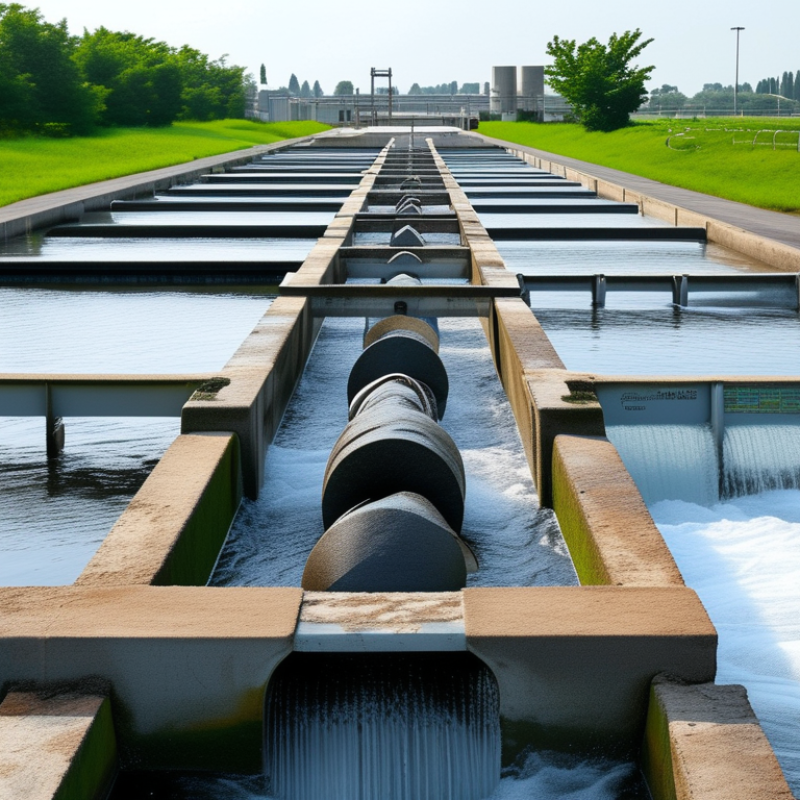
Chlorine dioxide water treatment uses a dissolved oxidant to control bacteria, viruses, fungi, and biofilms. Unlike chlorine, it does not mainly form trihalomethanes when organic matter is present. Its performance also changes less across normal drinking-water pH ranges. The World Health Organization’s Guidelines for Drinking-water Quality lists a provisional chlorine dioxide guideline value of 0.3 mg/L. The same report identifies chlorite as a key by-product requiring control.
In practice, treatment begins with on-site generation or carefully managed chemical dosing. Operators monitor oxidation-reduction potential, chlorine dioxide residual, chlorite, chlorate, pH, temperature, and contact time. A clear result matters: water leaving a distribution tank should retain adequate disinfectant without exceeding regulatory limits. The U.S. Environmental Protection Agency sets a chlorine dioxide maximum residual disinfectant level of 0.8 mg/L and a chlorite maximum contaminant level of 1.0 mg/L. These figures make monitoring essential, not optional.
Small errors become visible quickly.
Industrial facilities often use chlorine dioxide for cooling towers, process water, drinking-water systems, and difficult biofilm conditions. However, equipment quality differs between suppliers worldwide. Buyers should request validated generation capacity, dose-control accuracy, by-product testing, maintenance records, and operator training. A supplier may show impressive removal data under laboratory conditions, yet field water can contain changing organic loads and uneven flow. That gap deserves honest attention. Treatment is powerful, but it is not automatically safe or effective without site-specific testing, documented controls, and trained personnel.
Chlorine dioxide is an on-site generated oxidizing disinfectant used to control bacteria, viruses, biofilm, taste, and odor in drinking water and industrial water systems. Its main regulated by-products are chlorite and chlorate. The chart compares guideline or regulatory values for chlorite and chlorate in drinking water. Values are expressed in milligrams per liter (mg/L).
Sources: World Health Organization, Guidelines for Drinking-water Quality, provisional guideline values for chlorite and chlorate; U.S. Environmental Protection Agency, Stage 1 Disinfectants and Disinfection Byproducts Rule, chlorite maximum contaminant level.
Top Chlorine Dioxide Water Treatment Suppliers Worldwide?
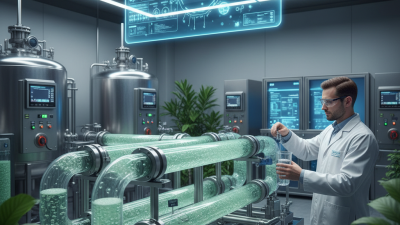
Chlorine dioxide systems usually generate the oxidant on site. Sodium chlorite reacts with chlorine or acid inside a controlled generator. The resulting gas dissolves quickly in the water stream. It attacks cell membranes, enzymes, and organic compounds. Unlike chlorine, it remains effective across a broader pH range. It can also reduce biofilm inside pipes and storage tanks. The chemistry is powerful, but it is not foolproof.
Operators typically manage dose through concentration, contact time, temperature, and water demand. These factors form the CT value used for disinfection control. A sudden rise in organic matter can consume chlorine dioxide faster than expected. Online analyzers, flow meters, and automatic dosing controls help correct that change. Still, instruments need regular calibration. Small errors can become expensive.
The World Health Organization’s Guidelines for Drinking-water Quality lists 0.3 mg/L for chlorine dioxide, with 0.7 mg/L guideline values for chlorite and chlorate. The U.S. Environmental Protection Agency sets a chlorine dioxide MRDL of 0.8 mg/L and a chlorite limit of 1.0 mg/L. These figures are reference limits, not universal operating targets. Reliable suppliers should provide generation testing, residual monitoring, safety interlocks, and operator training. I would also question systems promising perfect performance without site-specific water analysis. Real water is less predictable than a brochure suggests.
Comparing global chlorine dioxide water treatment suppliers requires more than reviewing product brochures. Start with technical evidence. Check active concentration ranges, dosing accuracy, monitoring methods, and generator materials. Ask for independent test reports and clear operating limits. A reliable supplier explains performance under changing water temperature, flow, and organic load. Vague promises deserve careful questions.
Certification and compliance should match the installation location. Review safety documentation, transport procedures, emergency guidance, and operator training. Confirm whether the supplier supports commissioning, calibration, maintenance, and replacement parts in your region. Response time matters when a pump stops at midnight. So does language support. A low purchase price can hide expensive service delays.
Request references from facilities with similar water chemistry and daily volume. If possible, arrange a pilot trial before signing a long contract. Measure residual levels, microbial results, chemical consumption, and downtime. Keep the records. A polished case study is not proof. I have found that supplier comparisons become weaker when buyers trust one impressive test. Some data may be incomplete, and site conditions can change quickly. Ask suppliers to state assumptions openly, including limitations and expected operator involvement. Evaluate total ownership cost, not only equipment price. The best choice may be less flashy, but easier to verify, operate, and maintain.
| Comparison Dimension | Factual Benchmark or Data Point | What a Strong Global Supplier Should Demonstrate | Evidence to Request Before Selection |
|---|---|---|---|
| Product and Generation Method | Chlorine dioxide is commonly produced on site because it is unstable and is generally not transported or stored as a concentrated pure gas. | A clearly defined generation method, including precursor chemicals, operating conditions, gas or solution output, and safeguards against unintended by-products. | Process flow diagram, equipment specifications, chemical compatibility data, operating manual, and independent performance test results. |
| Application Coverage | Common applications include municipal drinking-water treatment, industrial process water, cooling-water systems, wastewater treatment, food-processing water, and biofilm control. | Documented experience in the same water matrix, flow range, contamination profile, and regulatory environment as the proposed project. | Relevant project references, application case studies, water-analysis requirements, and a written treatment design basis. |
| Capacity Range | Commercial systems are available in different capacity classes, from compact packaged units for smaller facilities to engineered systems for large continuous-flow plants. | The supplier should publish rated production capacity, turndown capability, operating hours, and the maximum treated flow supported by the proposed design. | Guaranteed capacity at stated temperature, water chemistry, precursor concentration, and target dose; include start-up and peak-flow conditions. |
| Disinfection Performance | Chlorine dioxide effectiveness depends on concentration, contact time, pH, temperature, organic demand, and the target microorganism. A single universal dose cannot be assumed. | Design calculations should use site-specific water data and should distinguish between primary disinfection, residual maintenance, and biofilm-control objectives. | CT calculations, pilot-test results where applicable, microbial reduction data, residual-monitoring plan, and commissioning acceptance criteria. |
| Drinking-Water Compliance | In the United States, the EPA maximum residual disinfectant level for chlorine dioxide is 0.8 mg/L, while the maximum contaminant level for chlorite is 1.0 mg/L. | The proposed system should control both chlorine dioxide residual and chlorite formation, with compliance limits mapped to the destination country or state. | Regulatory compliance matrix, chlorite and chlorate monitoring strategy, sampling points, alarm limits, and laboratory test methods. |
| Certification of Treatment Chemicals | NSF/ANSI/CAN 60 is a widely recognized standard for chemicals used in drinking-water treatment. Applicability depends on the product, jurisdiction, and intended use. | The supplier should identify the exact certified product, concentration, use category, and certification scope rather than providing a general certification statement. | Current certificate, scope statement, product identification, safety data sheet, certificate validity date, and local acceptance documentation. |
| Materials and Equipment Safety | Chlorine dioxide and its precursors can be corrosive or reactive; wetted materials, ventilation, containment, and gas detection are important design considerations. | Equipment should include compatible wetted materials, secondary containment, ventilation requirements, emergency shutdown, leak detection, and safe chemical-storage provisions. | Materials-of-construction list, hazard assessment, P&ID, safety interlock schedule, ventilation calculations, and emergency-response procedure. |
| Automation and Monitoring | Reliable systems typically monitor flow, precursor supply, generator status, chlorine dioxide residual, and relevant water-quality parameters. | The supplier should provide automatic dose control, high- and low-residual alarms, data logging, remote diagnostics, and integration with SCADA or PLC systems. | I/O list, control philosophy, communication protocols, alarm matrix, calibration schedule, cybersecurity policy, and sample trend reports. |
| Precursor Chemical Supply | Common precursor arrangements use sodium chlorite with an activator or another controlled generation chemistry. Chemical availability and transport rules vary by country. | The supplier should provide a dual-source or contingency plan, chemical purity requirements, consumption estimates, storage limits, and delivery lead times. | Chemical specification, certificate of analysis template, annual consumption model, storage guidance, supply agreement, and emergency replenishment plan. |
| Energy and Operating Cost | Total operating cost is driven by precursor consumption, electricity, water demand, consumables, labor, calibration, maintenance, and waste handling. | A transparent life-cycle-cost model should separate capital expenditure from operating expenditure and state all assumptions used in the calculation. | Five- to ten-year total-cost-of-ownership model, utility consumption data, chemical-use guarantees, maintenance schedule, spare-parts pricing, and labor assumptions. |
| Installation and Commissioning | Chlorine dioxide installations require site-specific hydraulic, electrical, ventilation, chemical-storage, and control-system interfaces. | The supplier should provide detailed engineering, factory acceptance testing, site acceptance testing, operator training, and documented performance commissioning. | Project schedule, responsibilities matrix, FAT/SAT protocols, commissioning checklist, training agenda, and performance-guarantee terms. |
| Service Network and Response | Treatment plants depend on regular calibration, preventive maintenance, chemical-system inspection, and timely technical support. | Compare local service coverage, response-time commitments, remote-support capability, technician qualifications, and availability of critical spare parts. | Service-level agreement, regional support map, escalation procedure, spare-parts stocking policy, maintenance reports, and customer references. |
| Warranty and Performance Guarantees | Equipment warranties commonly distinguish between generator hardware, analyzers, pumps, sensors, and consumable components. | Warranty terms should state duration, exclusions, guaranteed production rate, residual-control accuracy, availability, and remedies for non-performance. | Draft warranty, performance-guarantee schedule, liquidated-damages provisions where applicable, and acceptance-test criteria. |
| International Delivery Capability | Global projects may involve different electrical standards, pressure units, languages, import rules, hazardous-chemical classifications, and documentation requirements. | The supplier should demonstrate experience with the destination country and provide compliant drawings, manuals, labels, certificates, and shipping documents. | Export references, Incoterms, delivery schedule, country-specific compliance checklist, multilingual documentation plan, and customs classification. |
| Supplier Evaluation Scorecard | A weighted scorecard reduces the risk of selecting a supplier solely on initial equipment price. | Suggested weighting: Compliance 25%Safety 20%Performance 20%Life-Cycle Cost 15%Service 10%Delivery 10% | Require identical data fields from every bidder, score only documented claims, and conduct technical clarification before commercial ranking. |
Note: Regulatory limits, certification requirements, chemical-transport rules, and permitted applications vary by jurisdiction. Final supplier selection should be based on site-specific water analysis, local authority approval, and independently verifiable documentation.
Leading chlorine dioxide water treatment suppliers worldwide are judged by more than equipment price. Experienced providers develop systems around raw-water quality, flow variation, temperature, and contact time. They should supply on-site generation, dosing controls, compatible materials, and operator training. Field records matter. A polished brochure is not proof.
The World Health Organization’s Guidelines for Drinking-water Quality identifies chlorite and chlorate as important disinfection by-products, with provisional guideline values of 0.7 mg/L for each. The United States Environmental Protection Agency sets a maximum residual disinfectant level of 0.8 mg/L for chlorine dioxide. These figures make monitoring essential, not optional. Strong suppliers therefore offer calibrated sensors, sampling plans, alarm settings, and documented maintenance procedures.
The best global suppliers also support pilot testing before full installation. They compare microbial reduction, chemical demand, residual stability, and by-product formation under real operating conditions. Some proposals still overpromise. That deserves scrutiny. A system suitable for a municipal plant may perform poorly in a remote facility with unstable power or limited technical staff. According to the International Water Association’s sector reports, digital monitoring and operational resilience are becoming central procurement priorities. Buyers should request independent test results, local service coverage, spare-part availability, and compliance documentation. Cost matters, but predictable performance matters more.
Chlorine dioxide supports drinking-water treatment, cooling systems, wastewater control, and selected food-processing applications. It can reduce microbial risks while limiting some chlorinated by-products. Application design matters. Water chemistry, temperature, flow rate, and contact time affect performance. A capable supplier should provide dosing calculations, commissioning support, and operator training. Ask for site-specific guidance, not generic brochures.
Safety standards should guide every purchasing decision. Request current safety data sheets, product specifications, batch records, and independent test results. Equipment should include secure chemical storage, ventilation, leak detection, and clear emergency procedures. Operators need training in handling, monitoring, and shutdown practices. Confirm compliance with applicable drinking-water, workplace, transport, and environmental requirements in the installation country. Local approval may differ from international certification.
Purchasers should compare total operating cost, not only the quoted unit price. Check reagent availability, calibration needs, replacement parts, service response, and digital monitoring options. Review residual limits and by-product testing plans before signing a contract.
A small pilot test can expose problems with organic load or inconsistent water quality. That step is easy to skip. It should not be.
Supplier references from similar facilities add practical confidence, although they cannot replace independent validation. Document every assumption, because unclear assumptions often become expensive changes later.