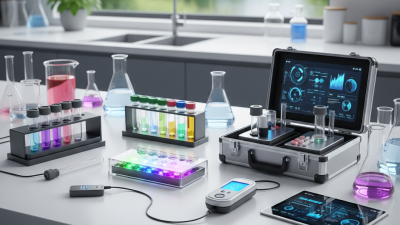
What is a Free Water Test Kit and How Can It Benefit You?
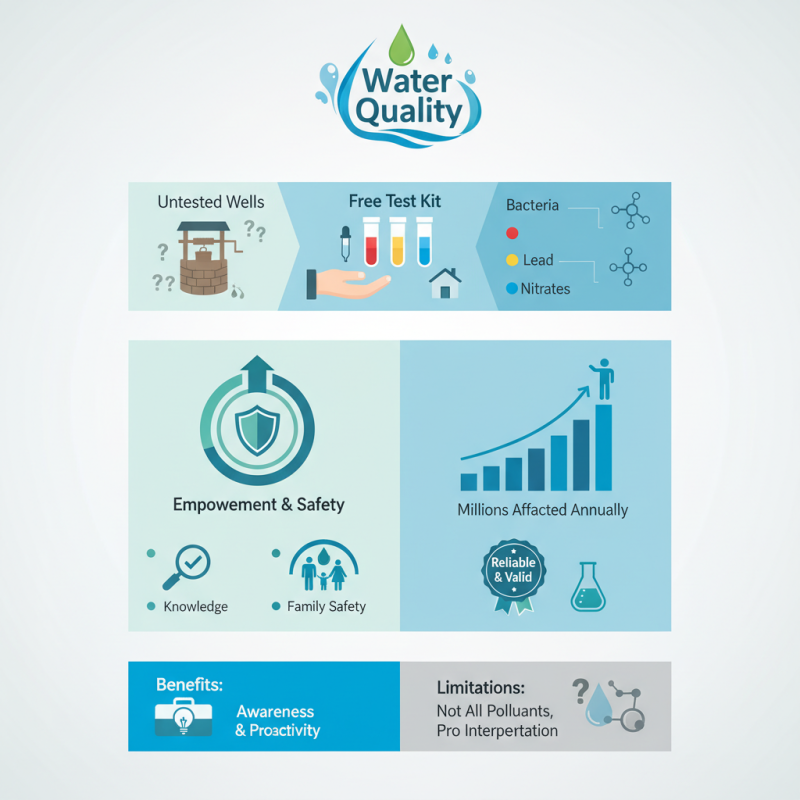
In recent years, water quality has become a pressing concern for households and communities. According to the Environmental Protection Agency, nearly 10% of U.S. households rely on private wells, which may not be regularly tested. A free water test kit provides a valuable solution for these households. It allows users to quickly assess potential contaminants such as bacteria, lead, and nitrates.
Many people are unaware of the hidden dangers in their water. In fact, the CDC reports that contaminated water affects millions annually. By using a free water test kit, individuals empower themselves with knowledge. They take an active role in ensuring their family's safety. Not every test kit is the same. It's essential to choose one that is reliable and scientifically valid to ensure trustworthy results. Testing water can reveal serious issues that may require further action.
With easy access to these tools, more people can identify potential health risks. However, it’s critical to reflect on the limitations of such kits. They might not detect every pollutant, and some results require professional interpretation. Overall, exploring the benefits of a free water test kit fosters awareness and proactive measures.
What is a Free Water Test Kit?
A free water test kit is a valuable tool for anyone concerned about their water quality. These kits typically allow users to analyze essential aspects such as pH levels, contaminants, and mineral content. Understanding your water’s condition helps you make informed decisions about filtration or treatment options.
People often overlook the importance of testing water. Tap water might appear clear, but it can harbor hidden impurities. Regular testing empowers homeowners to ensure their water is safe for cooking and drinking. Many local health departments provide free kits to promote public health. It’s a simple way to enhance your water safety.
Tips: Always read the instructions carefully before using a test kit. Make sure to avoid contaminants during the testing process. Store your samples correctly to avoid inaccurate results. Testing water can be a bit overwhelming, but it’s a step towards better health. Consider getting your water tested annually, especially if you notice changes in taste or odor.
Key Components of a Water Test Kit
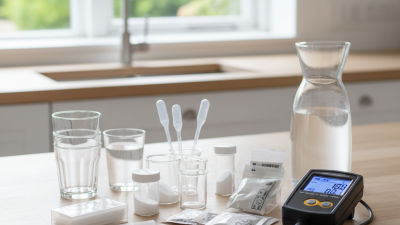
A free water test kit is a valuable tool for assessing your water quality. Understanding its components is crucial. A comprehensive kit typically includes test strips, color charts, and collection bottles. Each component serves a specific purpose in analyzing various water parameters.
Test strips are easy to use. They allow users to measure pH levels, chlorine, and hardness. Users should follow instructions closely to ensure accurate results. However, not all tests may be compatible with all water types. This might lead to misleading readings.
Color charts help visualize the results when using liquid tests. By comparing colors, users can determine contamination levels. Collection bottles are essential for sampling water accurately. While these kits are reliable, they may not cover every possible contaminant. Some users may find it difficult to interpret the results. Regular testing is necessary, as water quality can change over time.
What is a Free Water Test Kit and How Can It Benefit You? - Key Components of a Water Test Kit
| Parameter Tested |
Ideal Range |
Potential Issues |
Test Method |
| pH Level |
6.5 - 8.5 |
Corrosion or scale buildup |
pH Test Strips |
| Hardness |
0 - 150 mg/L |
Scale, soap scum |
Hardness Test Kit |
| Chlorine |
0.5 - 2.0 mg/L |
Taste and odor issues |
Chlorine Test Strips |
| Nitrate |
0 - 10 mg/L |
Health issues, algae blooms |
Nitrate Test Kit |
| Lead |
0 mg/L |
Serious health risks |
Lead Test Kit |
How to Use a Free Water Test Kit Effectively
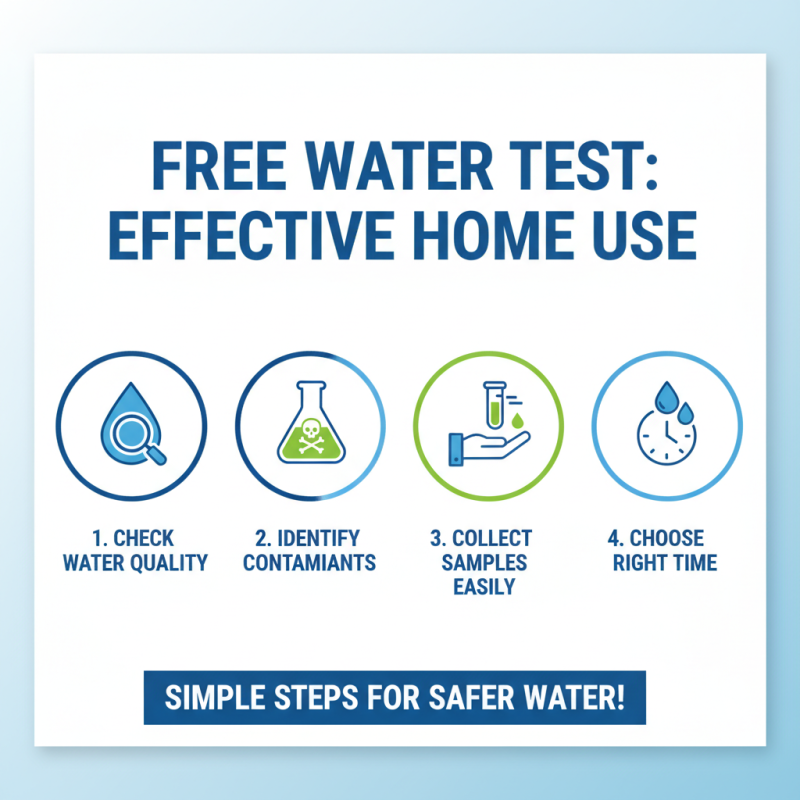
A Free Water Test Kit allows you to check your water quality at home. This tool can identify harmful contaminants. The process is simple and straightforward. Follow the instructions to collect water samples. Ensure you choose the right time for accurate results.
Before using the kit, prepare all needed materials. Rinse containers with tap water. This action removes potential impurities. Next, fill the test vials accurately. Don’t skip this step. Inconsistent samples can lead to misleading results. After collecting the samples, follow the kit's guide closely for the best outcome.
Tips: Always have clean hands when handling samples. This helps avoid cross-contamination. Keep the kit in a cool, dry place to protect its components. Review your results carefully. If something appears unusual, consider seeking professional help. Water testing might feel mundane, but accuracy is vital. Reflect on the results to understand your water better.
Common Contaminants Detected by Water Test Kits
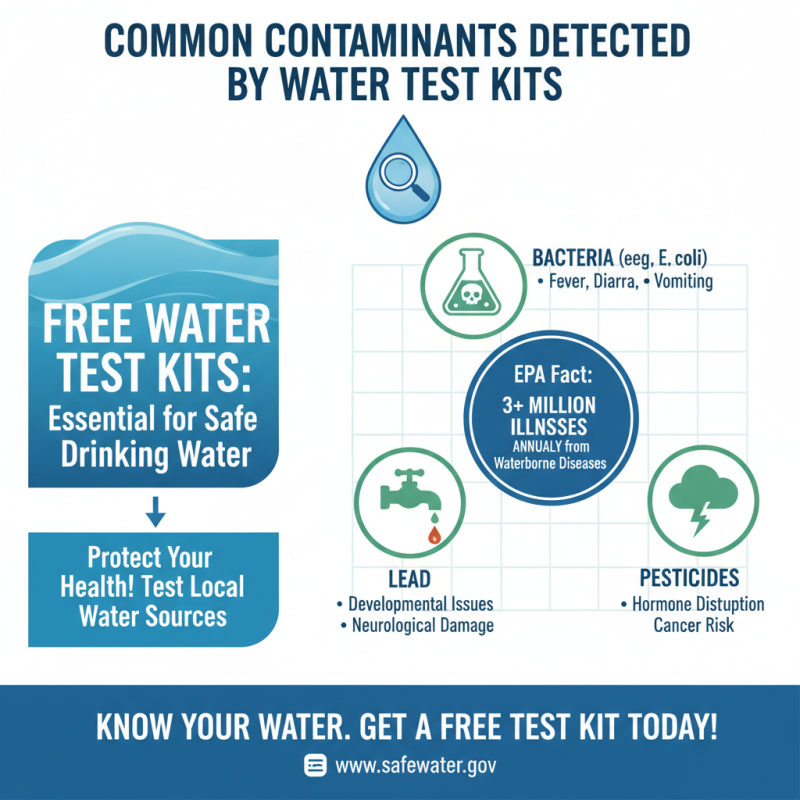
Free water test kits are essential tools for ensuring safe drinking water. They detect common contaminants that pose health risks. According to the Environmental Protection Agency (EPA), more than 3 million people fall ill each year due to waterborne diseases. This highlights the importance of testing local water sources.
Bacterial contamination, such as E. coli and coliforms, is a common issue. These microbes can indicate harmful pathogens that lead to gastrointestinal illnesses. Heavy metals, like lead and arsenic, often enter water through plumbing and soil contamination. The World Health Organization warns that lead exposure can cause serious developmental issues in children.
Organic chemicals are also prevalent. Chlorine, often used in treatment, can pose risks if levels are too high. Moreover, pesticides can leach into groundwater, threatening public health. In fact, the CDC indicates that 10% of U.S. groundwater samples contain pesticide residues. Regular testing can help identify these hazards, ensuring safer water. Testing empowers communities to take action against contamination, fostering better health outcomes.
Benefits of Regular Water Testing for Homeowners
Regular water testing is essential for homeowners. Contaminated water can jeopardize health and property. A free water test kit allows you to assess your tap water easily. It provides a simple way to detect harmful substances. By using these kits, you gain valuable insights into your water quality.
Testing your water regularly helps you stay informed. Certain contaminants may not have immediate visual signs. For example, high lead levels are not detectable by taste or smell. If left unchecked, such issues can lead to severe health problems over time. Homeowners should be proactive in ensuring safe drinking water, especially in older homes.
Many people underestimate the importance of water quality. They may avoid testing due to time constraints or perceived complexity. However, neglecting this responsibility can result in costly repairs or health complications later. Regular testing is a simple but vital step in home maintenance. It empowers you to make informed decisions about your water consumption.