

Why Does pH Meter Price Vary?
A pH meter may cost less than a restaurant lunch or more than a laboratory balance. The difference is not just branding. Probe design, measurement stability, calibration options, and resistance to moisture all affect the final price. A basic pocket meter may suit a quick garden-soil check. A lab model may need a replaceable glass electrode, temperature compensation, and documented calibration. Small details matter. A cable that survives daily rinsing can save more than it costs.
Technical reports help explain why these features matter. The IUPAC report Measurement of pH: Definition, Standards, and Procedures describes how pH measurements depend on defined standards and procedures. NIST’s Standard Reference Materials documentation also shows the care required to maintain reliable pH reference values. Neither report is a price list. They do, however, clarify why accuracy and traceability can raise equipment and service costs. Robert P. Buck, a co-author of the IUPAC recommendations, states the core definition as “pH = −lg aH.” That compact formula has practical consequences.
When comparing ph meter price, look beyond the number on the product page. Check what comes in the box: a suitable electrode, buffers, storage solution, and calibration support can change the real cost. Ask how often the probe may need replacement. That estimate is easy to overlook. A lower-priced meter can be sensible for occasional checks, while repeated, demanding measurements may justify a sturdier system. The right choice depends on the sample, the user, and the cost of getting a reading wrong. No single price tells the whole story.
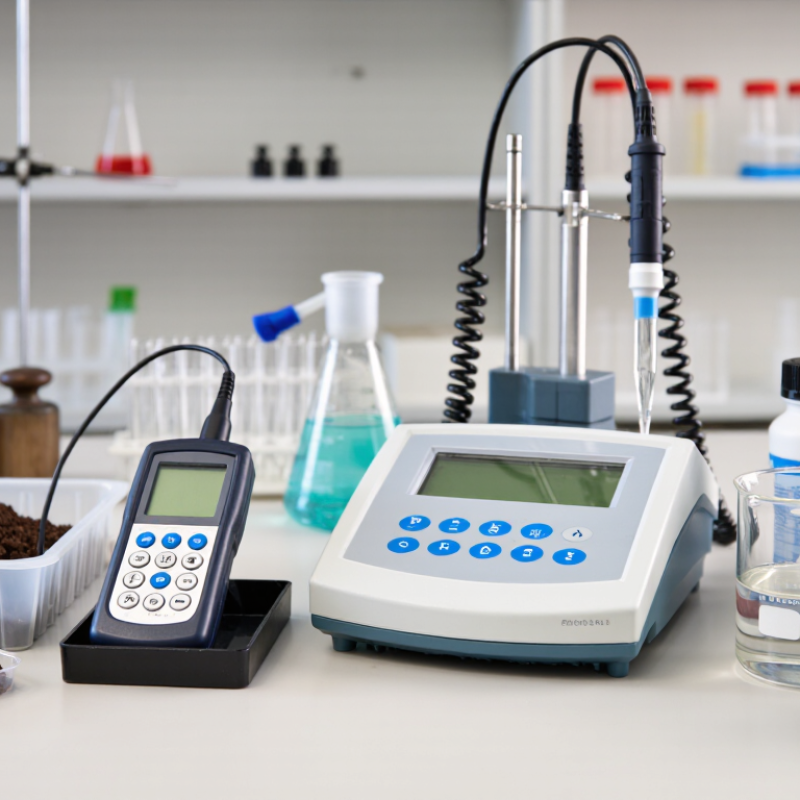
What a pH Meter Measures and How It Works
A pH meter does not directly count acid molecules. It estimates hydrogen-ion activity, expressed as pH = −log10 activity, following the IUPAC Gold Book definition. A one-unit change means a tenfold change in activity. The probe’s glass membrane responds to this difference, while a reference electrode provides a stable comparison potential. The meter converts the voltage between them into a pH reading. That is the signal.
At 25°C, the Nernst equation predicts a response of about 59.16 millivolts per pH unit for an ideal electrode. Real probes may respond less ideally as they age, dry out, or collect residue. Calibration with certified buffer solutions checks the meter against known values; ASTM D1293 sets out standard methods for measuring water pH. Temperature compensation adjusts the electrode’s expected response, but it does not correct for every temperature-driven change in the sample itself. That distinction is easy to miss.
These measurement details help explain price differences. A basic meter may suit occasional checks, while field or laboratory work can call for tougher probes, finer resolution, automatic temperature sensing, and more stable calibration. A chipped glass bulb or a slow, drifting reading is not a small inconvenience. It can change a decision. Higher cost may buy durability and control, but it cannot replace clean probes, fresh buffers, or careful technique. One weak point remains: even a capable meter can give misleading results when calibration is rushed.
Why Does pH Meter Price Vary? - What a pH Meter Measures and How It Works
A pH meter estimates how acidic or alkaline a solution is by measuring the electrical potential between a glass sensing electrode and a reference electrode. Prices vary with measurement performance, electrode quality, durability, calibration features, and included accessories. Price ranges below are indicative retail estimates in USD and can vary by market and configuration.
| Meter Type | Typical Price (USD) | What It Measures | Typical Performance | Why the Price Varies |
|---|---|---|---|---|
| Basic pocket meter | $15–$50 | pH, usually with a built-in or replaceable probe | Often about ±0.1 pH; manual or limited calibration | Simple electronics, fewer calibration options, and basic housing keep costs low. |
| General-purpose handheld meter | $50–$250 | pH; some models also measure temperature or millivolts | Commonly ±0.01–0.05 pH, depending on model and conditions | Automatic calibration, temperature compensation, better probes, and a more durable case add cost. |
| Laboratory benchtop meter | $200–$1,000+ | pH and often temperature; some support ion-selective or redox electrodes | Often 0.01 pH display resolution; stated accuracy varies by model | More stable measurement circuitry, larger displays, data logging, and expanded calibration features raise the price. |
| Rugged or specialized meter | $150–$800+ | pH in field, process, or challenging samples; features depend on the probe | Varies; may include waterproofing, replaceable probes, or application-specific sensors | Sealed housings, rugged connectors, specialized electrodes, and traceable records can increase cost. |
| Electrode and accessories | About $20–$300+ for an electrode; buffers and storage solution are additional | The electrode senses pH; buffer solutions provide known values for calibration | Performance depends on electrode design, condition, sample, and proper care | Special glass, junction design, cable construction, and suitability for viscous or low-ionic-strength samples affect price. |
How readings work: The glass membrane develops a voltage related to hydrogen-ion activity. The meter compares this signal with a reference potential and converts it to pH; temperature can affect the electrode response, so temperature measurement or compensation may improve results. Regular calibration with suitable buffer solutions and proper electrode storage are essential for reliable readings.
Related Posts
-
Top 10 Types of pH Meter for Water Buyers Should Know
-
What Is the Best pH Tester for Water in 2026?
-
2026 Top Types of pH Meter for Water Which Is Best?
-
China Top pH Tester for Water Which Is Best?
-
What is the 2026 Top PH Meter Price for Global Buyers?
-
How to Choose the Best PH Tester for Water Quality Testing?