China Top pH Tester for Water Which Is Best?
Choosing a ph tester for water is not just about finding the lowest price. A dependable reading can help track aquarium conditions, pool balance, or changes in a household water sample. Yet a pH number cannot establish whether water is safe to drink. The World Health Organization’s Guidelines for Drinking-water Quality explains that pH usually has no direct health impact, but remains an important operational water-quality parameter. The U.S. Environmental Protection Agency lists pH 6.5–8.5 as a secondary drinking-water standard, mainly addressing aesthetic and operational concerns.
The need for careful testing is real. WHO and UNICEF reported that 2.2 billion people lacked safely managed drinking-water services in 2022. That figure describes access, not a problem solved by buying a meter. Dr. Jamie Bartram, a water and sanitation researcher, has contributed to practical water-safety guidance. A useful expert takeaway, consistent with that guidance, is: “Treat pH as an operational signal, not a complete safety verdict.”
Small details matter. A dry or contaminated electrode, poor calibration, or a sample tested at the wrong temperature can distort the display. This guide compares China’s leading pH tester options by accuracy claims, calibration features, temperature compensation, probe design, and after-sales support. It also asks a less comfortable question: does the cheapest model stay reliable after repeated use? The best choice depends on the sample, testing frequency, and willingness to maintain the probe—not simply the number of features on the box.
What a Water pH Tester Measures
What a Water pH Tester Measures
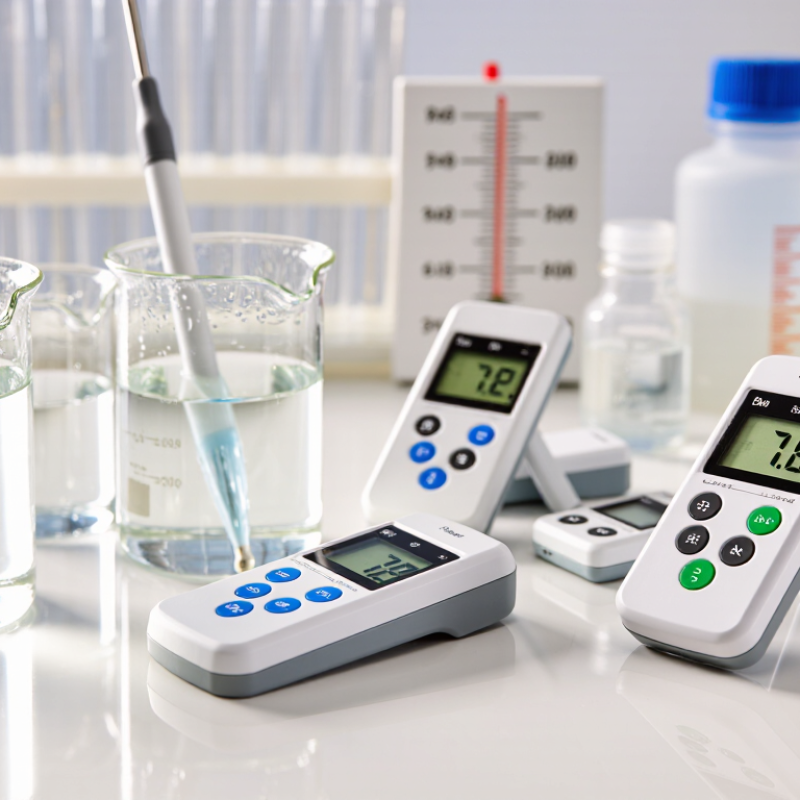
A water pH tester measures how acidic or alkaline a sample is. Its electrode detects an electrical response linked to hydrogen ion activity, then displays a pH value. The scale usually runs from 0 to 14, with 7 considered neutral at about 25°C. That matters. A reading of 6.5 does not tell you which substances are in the water; it only describes its pH. It is not a complete safety test.
For a useful result, rinse the probe, place it in a clean sample, and wait for the display to settle. Even small details count. Temperature, residue on the electrode, and an overdue calibration can shift the reading. A single number can feel reassuring, but it may hide changes between locations or across the day. Compare repeated samples under similar conditions, and follow the tester’s calibration instructions. I would not treat one quick dip as the whole story. pH is useful context, not a verdict on water quality.
China Top pH Tester for Water Which Is Best? - What a Water pH Tester Measures
A water pH tester measures pH, a measure of hydrogen ion activity that indicates how acidic or alkaline a sample is. It does not, by itself, measure contaminants, minerals, or overall water safety.
| Tester Type |
What It Measures |
Typical Measurement Characteristics |
Best Suited For |
Key Limitations |
| pH test strips |
Color change associated with the sample’s pH. |
Usually provide an approximate reading by comparison with a color chart. Available ranges and scale intervals vary by strip type. |
Quick screening and situations where a rough pH estimate is sufficient. |
Color matching is subjective; sample color and lighting can affect interpretation. Generally less precise than a calibrated electronic meter. |
| Pocket pH meter |
Electrical response from a pH-sensitive electrode, converted to a pH reading. |
Many models cover much or all of the conventional 0–14 pH scale. Resolution and accuracy are model-dependent; check the instrument’s specifications. |
Portable checks of pools, aquariums, hydroponic solutions, and general water samples. |
Needs suitable calibration, careful electrode storage, and cleaning. Low-ionic-strength water can be challenging to measure reliably. |
| Laboratory or benchtop pH meter |
Electrode potential related to pH, displayed after calibration. |
Typically supports calibration with buffer solutions and may offer higher-resolution readings or additional measurement controls. Performance depends on the meter, electrode, and method. |
Repeated measurements, laboratory work, and applications requiring controlled procedures. |
Less portable and more dependent on correct calibration, temperature handling, electrode condition, and sample technique. |
| Inline or process pH system |
pH at a sensor installed in a pipe, tank, or process line. |
Provides ongoing readings; usable range, response, and accuracy depend on the sensor and installation. |
Continuous monitoring in water treatment and industrial processes. |
Requires installation and maintenance. Fouling, flow conditions, temperature, and calibration can affect readings. |
Which Type Is Best?
The best choice depends on the application: strips are convenient for rough checks, a pocket meter suits portable routine testing, a benchtop meter is useful for controlled measurements, and an inline system is appropriate for continuous process monitoring. For dependable results, follow the instrument instructions and calibrate an electronic meter with suitable buffer solutions.
Measurement note: Temperature can affect both the sample’s pH and the electrode response. Automatic temperature compensation helps correct the electrode response but does not make the sample’s pH independent of temperature.
Main Types of Water pH Testers Made in China
China Top pH Tester for Water Which Is Best?
Main Types of Water pH Testers Made in China
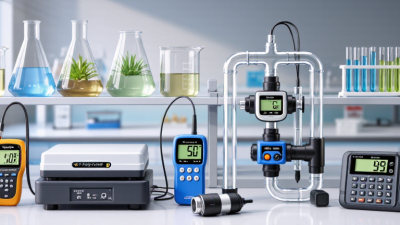
Water pH testers generally fall into four practical groups: strips, colorimetric kits, handheld digital meters, and benchtop or inline instruments. Strips suit quick checks in aquariums or field sampling. Their color blocks can be hard to distinguish under dim light. Colorimetric kits use indicator liquid and a comparison chart. They need no battery, but readings depend on careful color matching.
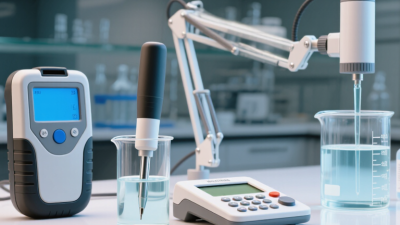
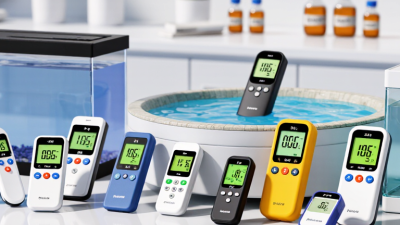
Handheld digital meters are common for pools, wells, and routine site checks. A glass electrode gives a numerical result, but it needs rinsing, proper storage, and calibration with buffer solutions. Benchtop meters offer steadier control for laboratories, while inline probes track process water continuously. Useful for trends. They still need maintenance.
The U.S. EPA lists pH 6.5–8.5 as a secondary drinking-water standard, not a universal safety verdict. ASTM D1293-18 describes standard test methods for measuring water pH. These references show why measurement conditions matter. A low-cost meter may work well, yet a drifting electrode can quietly mislead. I still verify readings with fresh buffers and a clean sample cup. Not magic. Chinese-made models are available across these categories; compare accuracy specifications, calibration options, and electrode replacement access rather than judging by country of manufacture alone.
China Top pH Tester for Water: Which Type Is Best?
Typical Display Resolution by Water pH Tester Type
Lower pH increments indicate a finer displayed reading. These values are representative examples, not standardized specifications; actual resolution varies by model. Display resolution is not the same as measurement accuracy. Choose strips for quick checks, portable meters for field testing, benchtop meters for laboratory work, and inline meters for continuous monitoring.
Key Features to Compare When Choosing a Tester
Choosing a water pH tester means comparing more than its advertised range.
Check stated accuracy, resolution, calibration options, and whether the probe can be replaced. For routine checks, a clear display and a stable reading matter more than a long feature list.
EPA’s National Secondary Drinking Water Regulations give a pH range of 6.5–8.5, a useful reference for many drinking-water checks.
It is a secondary standard, not a universal pass-or-fail measure. Small details matter.
Calibration should be simple, with buffers such as pH 4.00, 7.00, or 10.00 available for the expected sample range. Automatic temperature compensation helps, but it does not remove every source of error. Rinse the probe between samples, blot it gently, and allow the reading to settle.
ISO 10523:2008 describes methods for determining pH in water quality testing, underscoring the value of controlled measurement.
A waterproof housing, replaceable electrode, and clear calibration reminders can reduce trouble during field use. Yet no meter stays reliable without care.
I still find probe storage easy to overlook.
Compare the tester’s stated accuracy with your actual decision needs, and check whether its instructions explain calibration and maintenance plainly.
How to Assess Accuracy, Calibration, and Durability
Choosing a water pH tester starts with checking accuracy, not just the number of decimal places on its screen.
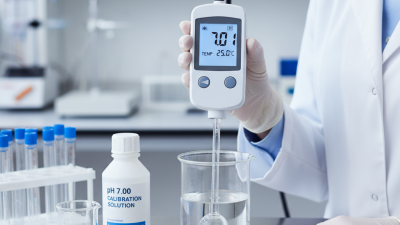
A reading displayed to 0.01 pH does not guarantee that level of accuracy. Look for a stated accuracy range and test the meter with fresh buffer solutions, commonly pH 4.00 and 7.00. Use pH 10.00 as well when your water may be alkaline. Keep buffers and samples near the same temperature, and allow readings to stabilize. A neat display can still mislead.
Calibration should be straightforward and repeatable.
Rinse the probe between solutions, gently blot it, and follow the meter’s calibration steps. Recheck a buffer after calibration; if the result is off, clean the probe and try again. Small handling differences matter. Calibration is not a one-time fix, especially when the tester is used often or stored poorly. Record occasional check results so drift does not go unnoticed.
Durability depends on more than a tough-looking body.
Check whether the probe can be replaced, whether the meter resists splashes, and whether its cap protects the sensor during transport. After testing, rinse the probe and store it in the solution recommended by its instructions; distilled water is generally unsuitable for long-term storage. A protective case helps around sinks, tanks, and field kits. One detail is easy to overlook: a rugged meter with a neglected probe may still give unreliable readings.
Which China-Made Water pH Tester Best Fits Your Needs?
China Top pH Tester for Water: Which Is Best?
Which China-made water pH tester best fits your needs depends on the water you measure and how often you test it. For drinking water, aquariums, irrigation, or a small lab, compare the stated accuracy, measurement range, and calibration options. A clear display helps when reading samples beside a sink or outdoors. Temperature compensation is useful, but it cannot correct a worn or contaminated electrode. Small details matter. Check whether the probe can be replaced and whether the manual explains storage and care.
A low-cost tester may suit occasional checks, while frequent measurements call for sturdier construction and accessible replacement parts. Look for documented specifications, a practical warranty, and responsive technical support. Country of manufacture alone does not prove accuracy. I would not choose by price or feature count alone; it is easy to overlook whether the instrument suits the actual sample. Very low-mineral water, for example, can give unstable readings, so follow the meter’s instructions and allow the reading to settle.
Tips: Calibrate with fresh buffer solutions that bracket your expected pH, often pH 4 and 7 for mildly acidic water. Rinse the probe between samples, then blot it gently—do not wipe the glass. Store it as directed. Calibration takes time, but skipping it can undermine an otherwise careful measurement.