
•  

How to Choose a Home Water Test Kit?

Choosing a home water test kit starts with a simple fact: clear water is not automatically safe water. Some contaminants have no visible signs. Lead, nitrate, arsenic, and bacteria may remain invisible in a clean glass.

The World Health Organization and UNICEF reported that 2.2 billion people lacked safely managed drinking water in 2022. In the United States, the Environmental Protection Agency estimates that drinking-water systems need about $625 billion in investment over the next 20 years. These figures describe broad infrastructure challenges, but they also explain why household testing deserves attention. “There is no safe level of lead exposure,” says Dr. Marc Edwards, a Virginia Tech environmental engineer and lead-contamination researcher. His warning is brief. It is also easy to overlook.

A reliable home water test should match your water source, location, and likely risks. Private-well owners may need annual bacterial testing, while older homes may require lead testing at the tap. A basic strip kit can offer useful screening, but it may not measure every contaminant accurately. That limitation matters. A laboratory-certified kit usually costs more, yet it can provide clearer methods, detection limits, and documentation. Look for certifications from recognized organizations such as NSF, ANSI, or an accredited laboratory.

Do not test blindly. Check local water-quality reports, inspect plumbing materials, and consider recent flooding or construction nearby. The perfect kit does not exist. A thoughtful choice is better than a cheap guess.

How to Choose a Home Water Test Kit?

Understanding the Purpose of a Home Water Test Kit

How to Choose a Home Water Test Kit?

A home water test kit is a screening tool, not a complete safety verdict. Its purpose is to identify possible changes in drinking water. The WHO and UNICEF Joint Monitoring Programme reported that 2.2 billion people lacked safely managed drinking water in 2022. Even clear water may contain invisible contaminants.

Start with your water source. Municipal water may need checks for lead, chlorine, copper, or unusual taste. Private wells require different attention. The U.S. Environmental Protection Agency recommends annual testing for total coliform bacteria, nitrates, total dissolved solids, and pH. Test again after flooding, repairs, or a nearby land-use change. A kit measuring only hardness cannot answer a bacteria question.

Read the test menu carefully. Look for detection limits, sample instructions, expiration dates, and independent performance verification. A low-cost strip may show a color shift within seconds, but that result can be difficult to judge under warm kitchen lighting. Follow the timing exactly. Small mistakes matter. The U.S. Geological Survey notes that sampling methods can influence water-quality results, especially for metals and nutrients.

Use the kit to decide what deserves closer investigation. A surprising result should be repeated with a clean sample, then confirmed by an accredited laboratory. Home testing can create false confidence when its coverage is narrow. It can also create unnecessary worry when instructions are misunderstood. Keep the report, sample date, water source, and recent plumbing work together. Those details help professionals interpret the result.
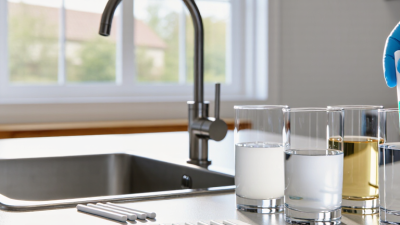
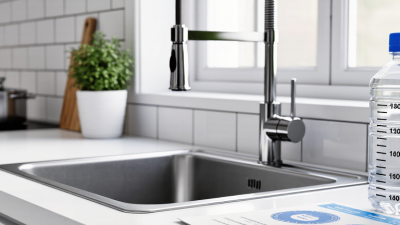
Identifying the Water Quality Parameters to Test

Choosing a home water test kit starts with identifying the right water quality parameters. A clear glass can mislead. For municipal water, check chlorine, pH, hardness, lead, copper, nitrate, and microbial indicators. Lead deserves attention in older homes, especially where plumbing contains aging solder. The U.S. Environmental Protection Agency’s 2024 Lead and Copper Rule Improvements emphasize lead exposure from household plumbing. For private wells, add E. coli, total coliforms, arsenic, nitrate, and manganese. The Centers for Disease Control and Prevention recommends testing private wells at least annually and after flooding or repairs. Start with risk.

Local conditions should guide additional testing. The World Health Organization reports that at least 1.7 billion people used drinking water contaminated with feces in 2022, showing why microbial testing remains important. Agricultural areas may require nitrate and pesticide screening. Regions with industrial activity may justify PFAS or solvent testing. In 2024, the EPA set a 4-nanogram-per-liter limit for PFOA and PFOS in public drinking water. Many home kits cannot reliably measure such low concentrations. That matters. Choose a kit with documented detection limits, sampling instructions, and laboratory verification. Test samples carefully: use a sterile container, avoid touching the inside, and record whether the tap ran first. I once treated a single result as proof of safety; that was too simplistic. Water quality changes, and one test may need confirmation.

Comparing Different Types of Home Water Test Kits

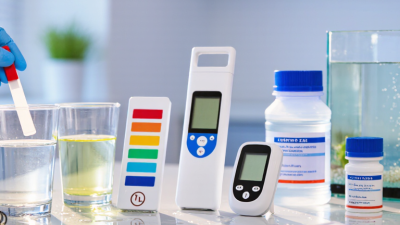
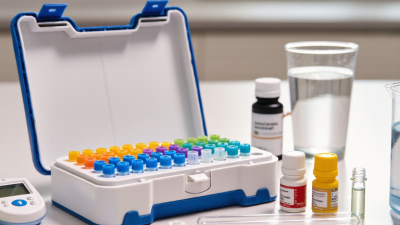
Choosing a home water test kit starts with the question you need answered. Test strips are cheap, quick, and useful for pH, hardness, chlorine, or nitrate screening. However, colors can be difficult to match under a kitchen light. Liquid-reagent kits usually provide clearer color changes. They require careful drops, clean containers, and accurate timing. Small errors matter.

Digital meters are convenient for pH, conductivity, and total dissolved solids. They do not identify every contaminant. A high conductivity reading does not prove that water is unsafe. The U.S. Environmental Protection Agency explains that total dissolved solids are only a general water-quality indicator. For bacteria, lead, arsenic, or pesticides, choose a mail-in laboratory kit with documented accreditation and chain-of-custody instructions. It costs more, but the result is more defensible.

The Centers for Disease Control and Prevention recommends annual testing for private wells, including coliform bacteria, nitrates, total dissolved solids, and pH. That advice makes a basic screening kit practical for routine checks. The World Health Organization and UNICEF reported that 2.2 billion people lacked safely managed drinking water in 2022, showing why local verification matters. I would not treat one home result as a final diagnosis. Test water from the tap after flushing, repeat unusual results, and compare them with the laboratory’s detection limits. Cheap is tempting. It is not always informative.

How to Choose a Home Water Test Kit? – Comparing Different Types of Home Water Test Kits

Home Test Kit Type Typical Parameters Approximate Test Time Result Format Relative Accuracy Ease of Use Main Advantages Important Limitations Best Suited For
Multi-Parameter Test Strips pH, free chlorine, total alkalinity, hardness, nitrate, nitrite, and sometimes other parameters About 1–2 minutes Color blocks compared with a printed chart Good for screening Very easy Fast, inexpensive, portable, and requires no measuring equipment or chemical preparation Color interpretation can be subjective; narrow color ranges may make small changes difficult to detect; results can be affected by expired strips or moisture exposure Routine checks, first-time screening, aquariums, pools, and basic household monitoring
Single-Parameter Test Strips Commonly designed for one parameter such as lead, nitrate, nitrite, chlorine, or hardness About 1–5 minutes Color change compared with a parameter-specific scale Good for targeted screening Very easy Focuses on one concern and can be more convenient than using a large multi-parameter kit Only tests the selected parameter; some strips have limited detection ranges and may not replace laboratory analysis Households investigating a specific concern or checking water after a plumbing or treatment change
Liquid Reagent Drop Tests pH, chlorine, hardness, alkalinity, ammonia, iron, and other parameters depending on the reagent set About 2–10 minutes Color matching or counting reagent drops until a color endpoint is reached Good to very good Moderate Often provides more controlled measurement than strips and can offer a wider or more precise reading range Requires careful sample volume measurement, clean containers, correct drop counting, and proper reagent storage Regular monitoring when better precision is needed without sending samples to a laboratory
Digital Photometer or Colorimeter Usually chlorine, pH, alkalinity, hardness, or other parameters supported by the instrument and test reagents About 1–10 minutes Digital numerical reading Good to very good Moderate Reduces visual color-matching errors and gives repeatable numerical results when calibrated and operated correctly Higher purchase cost; may require batteries, calibration, cleaning, and parameter-specific reagents Users who need repeatable measurements for treatment systems, pools, or ongoing water-quality control
Electronic TDS or Conductivity Meter Total dissolved solids estimate, electrical conductivity, and sometimes temperature About 30 seconds–2 minutes Digital numerical reading Useful for trend monitoring Easy Quick, reusable, and helpful for comparing changes before and after filtration or reverse osmosis TDS and conductivity do not identify individual contaminants and cannot confirm that water is microbiologically safe Monitoring filtration performance and detecting broad changes in dissolved mineral content
Bacteria Presence/Absence Test Usually indicates the presence or absence of selected indicator bacteria, such as total coliforms and sometimes E. coli About 24–48 hours, depending on the test method Growth or color change indicating a presumptive result Useful for screening Moderate Addresses microbiological contamination, which chemical test kits generally cannot detect Positive or uncertain results should be confirmed by an accredited laboratory; improper sampling can cause contamination or false results Private wells, water after flooding, or situations where bacterial contamination is a concern
Mail-In Laboratory Test May include metals, nutrients, minerals, pesticides, volatile compounds, bacteria, and other parameters selected in the test package Usually several days to a few weeks, including shipping and processing Written or electronic laboratory report with numerical results and reporting limits Highest among common home options Moderate Can test a broader range of contaminants using documented laboratory methods and reporting limits Costs more, requires careful sample collection and shipping, and is not suitable for immediate results Confirming unusual home-test results, evaluating private wells, or assessing potential contaminant exposure
Specialized Lead or Heavy-Metal Kit Lead and, depending on the method, copper, iron, arsenic, or other metals About 10 minutes to several days Color result, digital reading, or laboratory report Varies by method Easy to moderate Targets contaminants that may be important in older plumbing, fixtures, or buildings with unknown pipe materials Performance differs substantially between methods; a negative home result may not rule out low-level contamination; laboratory confirmation is preferable for health decisions Homes with older plumbing, recent plumbing work, or a specific concern about metal contamination

Note: Home test results are generally intended for screening and trend monitoring. Follow the kit instructions carefully, check the expiration date, use clean sampling containers, and consider accredited laboratory testing for health-related decisions or results that appear abnormal.

Checking Test Accuracy, Detection Limits, and Ease of Use

How to Choose a Home Water Test Kit?

Accuracy begins with the method, not the package design. Check whether the kit uses strips, liquid reagents, or digital measurement. Each method has different error risks. A color strip may appear unchanged under dim kitchen light. That is a real limitation. Compare the stated detection limit with official health benchmarks. The U.S. EPA lists 10 micrograms per liter for arsenic and 15 micrograms per liter as the lead action level (National Primary Drinking Water Regulations, 2024). A kit that detects only higher levels may miss important contamination.

Read the instructions before opening the test. Sampling errors can distort results. Use a clean container, avoid touching the test area, and record the water temperature and testing time. The World Health Organization lists 10 micrograms per liter as guideline values for arsenic and lead (Guidelines for Drinking-water Quality, 2022). However, national standards differ, so results need careful interpretation. A “negative” result does not prove complete safety. It only means the substance was not detected within that test’s limits.

Tips: Choose kits with clear units, stated detection limits, expiration dates, and repeat-test guidance. Test the same tap twice if the first result seems unusual. Compare the kit with an accredited laboratory when health decisions depend on the result. Ease matters too: unreadable color charts create avoidable uncertainty.

How to Choose a Home Water Test Kit?

Checking test accuracy, detection limits, and ease of use starts with comparing a kit’s reporting range with established drinking-water reference levels.

The chart shows U.S. EPA regulatory reference levels for selected contaminants in drinking water. Choose a kit whose detection limit is below the relevant reference level, provides clear units, and reports results with an accuracy statement or validation method. These values are reference levels, not measurements of any specific kit.

Interpreting Results and Choosing Appropriate Follow-Up Actions

How to Choose a Home Water Test Kit?

When a home water test kit shows a color change, resist treating it as a final diagnosis. Compare the shade under natural light, then record the result, date, sample location, and water source. Read twice. Many strips provide a screening estimate, not a laboratory measurement.

Results can shift when strips are damp, expired, or held in water too long. Temperature, cloudy samples, and recently disinfected pipes may also affect readings. Do not guess.

If lead, nitrate, bacteria, or another health-related contaminant appears elevated, repeat the test carefully. Use a clean container, follow the stated waiting time, and avoid touching the test area. A single unusual result deserves attention, but it does not always prove a persistent problem. Contact your local public health department or a laboratory accredited for drinking-water analysis. Ask which sampling bottle, preservation method, and analytical method match the suspected contaminant. Small details matter.

Do not rely on boiling as a universal fix. It can reduce many microbes, but it does not remove metals, nitrate, or several chemical contaminants. Until confirmed results are available, consider using a verified alternative water source for drinking and cooking.

Document every result, including normal ones; trends across several samples are often more informative than one alarming number. Even careful readers can misread a borderline color. Reviewing the evidence is safer than reacting to color alone.