

How to Choose the Best Well Water Test Kit?
Choosing the best well water test kit starts with one uncomfortable truth: clear water is not necessarily safe water. Private wells can carry bacteria, nitrates, iron, manganese, arsenic, or other contaminants without obvious warning signs. Taste and appearance are weak guides.
Dr. Andrew Whelton, a water-quality researcher at Purdue University, has emphasized, “You can’t see, smell, or taste many contaminants.” That caution should shape every buying decision. A reliable well water test kit should match your region, well depth, household risks, and recent changes in water quality. It should also provide clear instructions, clean sample containers, dependable detection limits, and access to an accredited laboratory when confirmation matters.
Convenience is useful.
Yet convenience can mislead. A color strip may offer a quick screening result, but it cannot replace professional analysis for serious concerns. Some kits test only pH, hardness, and chlorine, even though chlorine may not be relevant to an untreated private well. Other kits promise broad coverage without explaining their limits. That should make you pause.
This guide examines how to compare test categories, laboratory options, sampling procedures, certifications, and total costs. It also considers practical details, such as whether the sample must be chilled, delivered quickly, or collected after flushing the tap. My own view is cautious: no single well water test kit answers every question. Choosing the cheapest option may feel efficient, but it can leave important risks unexamined. Good testing is not about buying the most impressive package. It is about obtaining results you can understand, verify, and act on responsibly.
Define Your Well Water Testing Needs
How to Choose the Best Well Water Test Kit?
Define Your Well Water Testing Needs
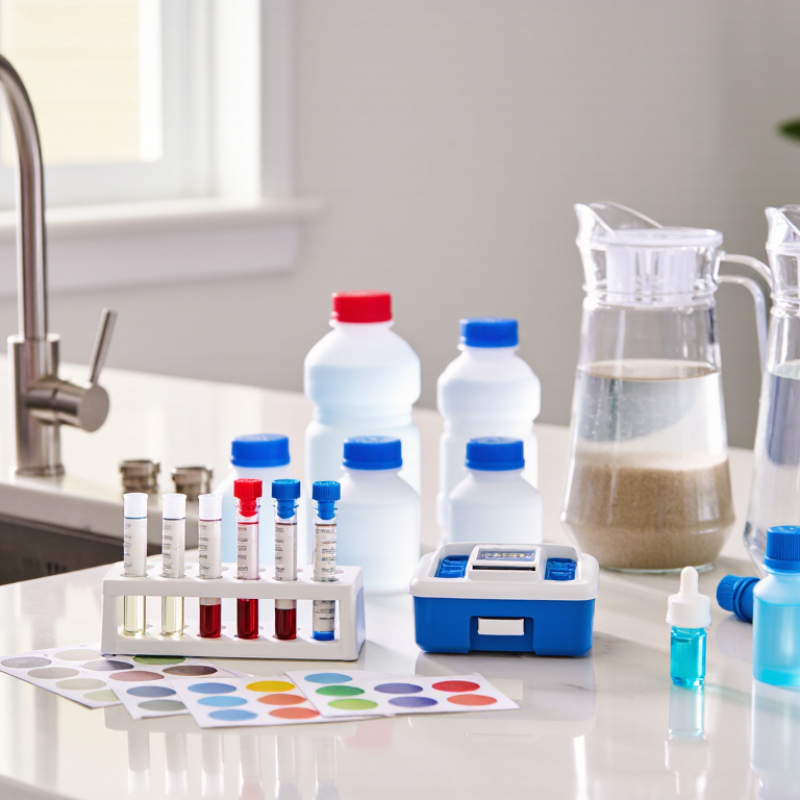
Choosing a well water test kit starts with understanding your water source and household concerns. A new well may require broader testing than an established one. Consider bacteria, nitrate, lead, arsenic, pH, hardness, iron, and sulfur. Nearby farming, flooding, septic systems, or industrial activity can change your priorities. Check your well’s age and maintenance records before buying a kit. These details make testing more purposeful.
Tips: Write down visible changes, unusual odors, and recent repairs. Test after flooding or long periods of disuse. Follow the sampling instructions carefully, because a dirty container can distort results. Choose a kit that lists detection limits and provides clear instructions. I have seen people select cheap strips for complex concerns. That choice can leave important questions unanswered.
Use field tests for quick screening, not final certainty. A strange result deserves confirmation through a qualified laboratory. Collect the sample from the recommended tap, avoid touching the inside of the bottle, and record the date. Keep the sample cool when instructions require it. Compare results with local drinking-water guidance, but do not treat every number as a diagnosis. Test performance can vary. Even careful sampling is not perfect. If young children, pregnant people, or vulnerable residents use the water, include relevant health concerns when defining your testing plan.
| Testing Need | Recommended Parameters | Why It Matters | Suitable Testing Approach | Typical Testing Timing | Priority |
|---|---|---|---|---|---|
| Basic safety screening for any private well | Total coliform bacteria, Escherichia coli (E. coli), nitrate/nitrite | Coliform bacteria indicate possible sanitary contamination, while E. coli suggests contamination from human or animal waste. Nitrate is especially important for infants and pregnant people. | Use a certified laboratory for the most reliable result. Home screening kits may be useful for preliminary checks but should not replace laboratory confirmation. | At least annually, and whenever the well is newly constructed, repaired, flooded, or shows a change in taste, odor, or appearance. | High |
| Metal contamination risk | Arsenic, lead, copper, chromium, cadmium, and manganese | Some metals can enter groundwater naturally or originate from plumbing, fittings, industrial activity, mining, or nearby waste sites. Lead exposure is a particular concern for children and pregnant people. | Laboratory analysis using validated methods is recommended. Color-change strips are generally insufficient for dependable compliance-level decisions. | During the initial well assessment, after plumbing changes, and periodically when local geology or land use indicates a risk. | High when risk exists |
| Corrosion and plumbing assessment | pH, alkalinity, hardness, total dissolved solids, iron, manganese, chloride, and sulfate | These indicators help explain scaling, staining, metallic taste, salty taste, corrosion, and possible damage to plumbing or treatment equipment. | A multi-parameter laboratory panel or a carefully selected field kit can be appropriate for screening. Confirm unusual results with a laboratory. | When water quality changes, fixtures corrode, stains appear, or a treatment system is being selected or adjusted. | Routine or problem-based |
| Microbial contamination after flooding or well damage | Total coliform bacteria and E. coli | Floodwater, damaged well caps, cracked casings, or surface runoff can introduce microorganisms into a private well. | Collect a properly preserved sample for laboratory testing. Follow local guidance for disinfection and retesting if contamination is detected. | Immediately after flooding, heavy runoff, structural damage, or suspected contamination; retest after corrective action. | Urgent |
| Agricultural land nearby | Nitrate/nitrite, coliform bacteria, pesticides, and selected herbicides | Fertilizers, manure, septic systems, and agricultural chemicals may affect groundwater, especially in shallow or vulnerable wells. | Use laboratory testing matched to locally used chemicals. A general home kit usually cannot screen for the full range of pesticides. | At least annually for nitrate in a vulnerable area, with additional testing based on local agricultural practices and advisories. | High when nearby |
| Septic system or animal-waste exposure | Coliform bacteria, E. coli, nitrate/nitrite, chloride, and conductivity | Wastewater and animal waste can introduce pathogens and nutrients into groundwater. Chloride and conductivity may help indicate a change in water chemistry but do not prove contamination by themselves. | Laboratory testing is preferred, especially when illness, sewage odor, or a sudden water-quality change is present. | Annually or more often when the well is close to a septic system, livestock area, or drainage path. | High when exposure exists |
| Fuel, solvent, or industrial contamination risk | Volatile organic compounds, petroleum-related compounds, and site-specific chemicals | Gas stations, fuel storage, dry-cleaning operations, manufacturing, landfills, and spills may release chemicals that are not detectable by taste or odor. | Use an accredited laboratory and request a targeted analytical panel based on the suspected source. Basic home kits are not suitable for this purpose. | After a spill, nearby land-use change, unusual odor, or regulatory or environmental advisory. | Urgent when suspected |
| Geographic or geological concern | Arsenic, fluoride, radon, uranium, selenium, or other locally identified constituents | Naturally occurring contaminants vary by region and geology. Some may be present without affecting taste, color, or odor. | Consult local health or environmental authorities to identify region-specific analytes, then use laboratory testing. | During the first comprehensive assessment and according to local risk information or changes in well conditions. | Location-dependent |
| Choosing a quick home screening kit | Commonly pH, hardness, chlorine, nitrate, nitrite, iron, copper, and sometimes bacteria indicators | Home kits can provide an inexpensive preliminary indication and help identify whether further testing may be needed. | Choose a kit with clear units, an expiration date, storage instructions, detection limits, and a documented method. Treat results as screening information, not definitive proof of safety. | For preliminary checks or trend monitoring between laboratory tests. | Supplementary |
| Confirming a treatment system is working | The contaminant targeted by the treatment system, plus relevant operational indicators such as pH, hardness, or flow-related measurements | A treatment device may reduce one contaminant while leaving others unaffected. Testing verifies performance and helps identify exhausted media or maintenance problems. | Test untreated and treated water using the same laboratory method whenever possible. Follow the treatment system’s maintenance schedule. | After installation, after maintenance, and at intervals appropriate to the contaminant and treatment technology. | Performance-based |
| Sampling quality and result reliability | Correct sample bottle, preservation, sampling point, chain of custody, and delivery time | Improper collection, household filters, dirty faucets, expired materials, or delayed delivery can produce misleading results. | Follow the laboratory’s instructions exactly. Use an unfiltered cold-water sample unless the test specifically requires another procedure. | Every time a sample is collected. | Essential |
Related Posts
-
How to Choose the Best Water Test Kit?
-
Why Is Home Water Testing Important for Your Health?
-
10 Best Home Water Test Kits for Drinking Water?
-

How to Use a Home Water Test Kit to Ensure Safe Drinking Water?
-
What is a Free Water Test Kit and How Can It Benefit You?
-

Top 10 EC Meters for Global Buyers in 2026?