10 Best Home Water Test Kits for Drinking Water?
Choosing the right home water test kit can feel surprisingly difficult. Clear water may still contain lead, nitrates, bacteria, chlorine, or unusual mineral levels. A glass can look clean while test results tell another story.
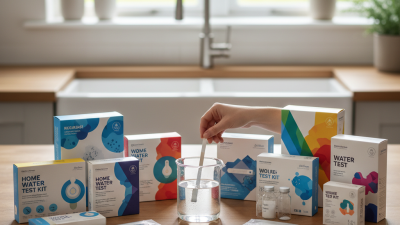
This guide examines 10 Best Home Water Test Kits for Drinking Water, focusing on accuracy, ease of use, testing range, and practical value. Each home water test is assessed through details that matter in real kitchens: sealed strips, readable color charts, sample cups, reaction time, and storage instructions. Small design choices can affect results.
No kit is perfect.
Some products offer broad screening but limited precision. Others test fewer contaminants yet provide clearer instructions and better laboratory support. I have considered manufacturer documentation, independent testing information, certification claims, and everyday user concerns. However, product formulas and certifications can change, so readers should verify current details before buying.
Testing technique also matters. A sample taken from a dirty faucet may create misleading results. Letting cold water run briefly, using a clean container, and following the stated timing can improve consistency. Still, home kits are screening tools, not complete replacements for accredited laboratory analysis. If results show lead, bacteria, or another serious concern, confirm them professionally before making major health decisions.
The goal is not to create unnecessary alarm. It is to help households choose a practical starting point, understand limitations, and ask better questions about the water flowing from their taps.
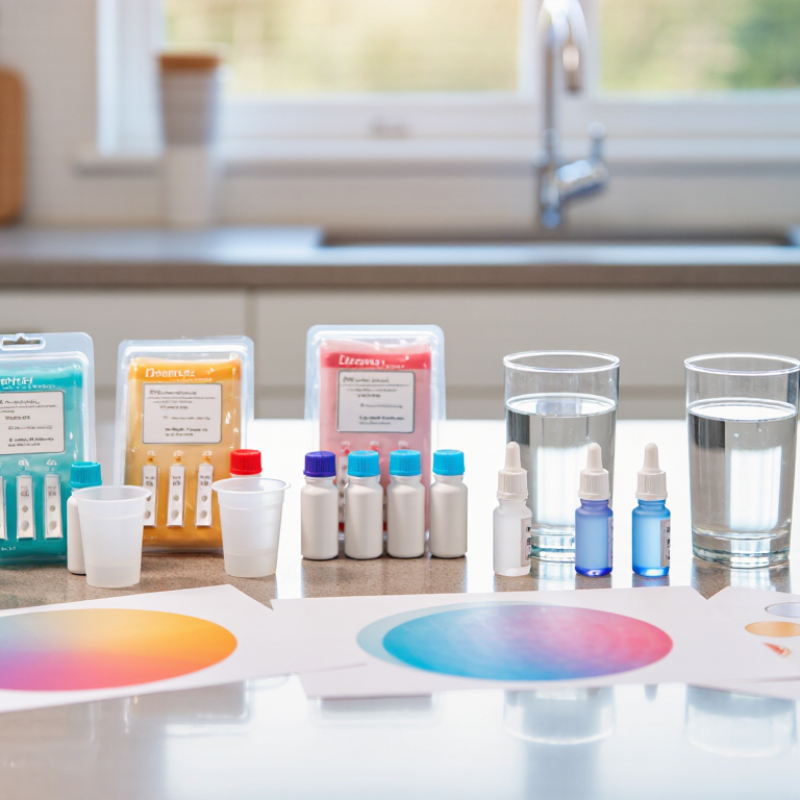
What Home Water Test Kits Measure: EPA-Regulated 90 Contaminants
10 Best Home Water Test Kits for Drinking Water?
Home water test kits can screen for common concerns, but they do not replace certified laboratory testing. EPA lists more than 90 regulated drinking-water contaminants, including lead, arsenic, nitrate, bacteria, disinfectant byproducts, and certain chemicals. EPA’s 2024 PFAS regulation also established limits for six PFAS, showing how testing priorities continue to change. A kit may measure only a small portion of this list. Read the analyte panel carefully.
Results are snapshots. Pipe age, sampling time, and recent rainfall can change them. For lead, collect a first-draw sample after water sits unused for several hours. Follow the instructions exactly. Color strips can be useful for quick screening, yet they may miss low concentrations. EPA-approved laboratory methods remain more reliable for legal or health decisions. The CDC also advises using certified laboratories when test results could affect treatment choices.
Tips: Choose a kit that names each contaminant and its detection limit. Check whether the method matches EPA or state guidance. Take photos of unusual color, sediment, or staining. Repeat questionable results.
My practical concern is simple: a clean-looking sample can still contain invisible contaminants, while an imperfect kit can create unnecessary fear. Use home testing as an informed first step, not a final verdict.
How Test Accuracy Compares Using EPA Detection-Limit Standards
10 Best Home Water Test Kits for Drinking Water?
Accuracy begins with detection limits, not colorful strips.
The U.S. EPA’s Method Detection Limit procedure measures the lowest concentration a laboratory can reliably distinguish from background noise. This is not the same as a kit’s advertised “range.” Many home tests show broad color bands, while EPA-approved laboratory methods report results in precise units, often micrograms or nanograms per liter.
The difference matters for PFAS. Under the EPA’s 2024 drinking-water rule, the limits are
4.0 nanograms per liter for PFOA and PFOS,
with a
10 nanogram limit
for several other compounds. A home kit that detects only at 1 part per billion may miss those levels. That result could look reassuring, but it is not sensitive enough. Too coarse.
When comparing the best kits, check the stated limit of detection, sample volume, calibration method, and independent validation.
EPA Method 200.8, for example, supports trace-metal analysis through laboratory instrumentation, not a simple color card. NSF testing standards can add useful quality evidence, but certification does not guarantee identical performance for every contaminant.
In practice, I would photograph the test color beside the reference chart and repeat borderline results. Tap water can change after flushing. Pipes, temperature, and storage time also interfere. I have found convenience valuable, yet convenience can hide uncertainty. A kit’s detection limit should be below the health benchmark, not merely below an ordinary household concentration.
Choosing Kits for Wells, Lead, Nitrate, PFAS, and Microbial Risks
Choosing the best home water test kit starts with your water source and likely risks. Private well owners should test annually, especially after flooding, repairs, or heavy rain. Test the source, not just the glass. A broad kit may screen pH, hardness, iron, and bacteria, but inexpensive strips can miss important contaminants. Check the expiration date, sampling instructions, and whether results are reviewed by an accredited laboratory.
For lead, collect both first-draw water and flushed water. Lead may enter from old plumbing, not the well itself. Nitrate deserves special attention in agricultural areas and homes with infants. Choose a kit with a clear reporting limit, not simply a color change. PFAS testing is rarely simple. Reliable options usually require carefully preserved samples and laboratory analysis. Read the method before buying.
Microbial testing needs sterile containers and quick delivery. Do not touch the inside of the cap or bottle. Presence-and-absence tests can show contamination, but they may not identify the organism or its source. Positive findings should be confirmed through a qualified laboratory and investigated promptly. Results can be messy. A negative test is only a snapshot, because contamination levels can change after storms, pump work, or well flooding. I would avoid choosing a kit based only on the number of contaminants listed; sampling quality and reporting transparency matter more.
Best Kits Assessed Against NSF/ANSI 42, 53, 58, and 401 Standards
Choosing among ten home water test kits requires more than counting strips.
NSF/ANSI 42 addresses aesthetic effects, including chlorine, taste, and odor.
NSF/ANSI 53 focuses on specific health-related contaminants.
NSF/ANSI 58 covers reverse-osmosis systems, while
NSF/ANSI 401 addresses selected emerging compounds.
These standards generally evaluate treatment claims, not every consumer test kit. That distinction matters. A kit can screen for nitrate or lead without proving removal performance. Look for independent laboratory methods, detection limits, sample-handling instructions, and accreditation.
EPA’s UCMR5 program requires public systems to monitor 29 PFAS and lithium, showing how quickly testing priorities evolve. A 2023 USGS national study detected PFAS in at least 45% of sampled U.S. tap-water supplies.
Detection does not automatically mean unsafe. It does justify careful screening.
The strongest kit should match the local risk profile.
Private-well users may prioritize nitrate, arsenic, bacteria, and lead. City-water users should compare results with their annual Consumer Confidence Report.
For NSF/ANSI 42 claims, verify chlorine and turbidity methods. For NSF/ANSI 53, check the exact contaminant and reduction target. For NSF/ANSI 58, a simple strip cannot confirm membrane performance. For NSF/ANSI 401, verify the listed compounds; “emerging contaminants” is not one analyte.
I would avoid kits offering only dramatic color charts. They look convenient. They may hide high detection thresholds. My review standard is imperfect: home kits help with triage, not final diagnosis.
An alarming result deserves certified laboratory confirmation, especially around infants, pregnancy, or immunocompromised residents.
Interpreting Results Against EPA MCLs and WHO Drinking-Water Guidelines
Interpreting Home Water Test Results Against EPA and WHO Guidelines
A home water test kit is useful for screening, not proving safety. Compare each result with the correct unit and benchmark. The U.S. EPA lists an arsenic maximum contaminant level of 0.010 milligrams per liter. Its nitrate limit is 10 milligrams per liter as nitrogen. These values are not interchangeable with WHO’s nitrate guideline, which is 50 milligrams per liter as nitrate. The chemistry is similar. The labels are not.
Lead requires extra care. EPA’s Lead and Copper Rule uses an action level of 15 micrograms per liter, not a conventional maximum contaminant level. The WHO Guidelines for Drinking-water Quality set a provisional lead guideline of 0.010 milligrams per liter. A positive strip result should prompt laboratory confirmation, especially after overnight stagnation. Tap temperature matters too.
Microbial results need stricter interpretation. WHO guidance states that E. coli should not be detectable in a 100-milliliter sample. A color change at home can be difficult to read, and disinfectant residues may affect some tests. I would record the collection time, flush duration, temperature, and lot information. Then I would repeat the test. Small details matter.
EPA standards usually regulate public water systems, not every private well. WHO values are health-based guidance, not automatic legal limits. A reassuring kit result can still miss pesticides, volatile chemicals, or changing contamination. That limitation is uncomfortable, but it deserves attention.
Drinking-Water Benchmarks: EPA MCLs vs WHO Guidelines
Reference concentrations for selected contaminants, in milligrams per liter (mg/L)
These values are regulatory or health-based reference limits, not measurements from a specific home water sample. A result below a benchmark does not guarantee that water is risk-free, and test-kit results should be interpreted using the kit’s detection limits, sampling instructions, and units. Arsenic, fluoride, cadmium, mercury, and benzene values are shown in mg/L.
Sources: U.S. National Primary Drinking Water Regulations and World Health Organization Guidelines for Drinking-water Quality.