
•  

China Top Water Softener Test Kit Manufacturers?

Choosing among China’s top water softener test kit manufacturers requires more than comparing prices and product photos. A dependable kit should produce clear, repeatable results for hardness, pH, iron, or other relevant water conditions. Accuracy matters. In practical use, technicians may fill a small vial, add measured drops, and watch for a precise color change. Poor instructions can make that simple process surprisingly inconsistent.

This guide examines manufacturers through experience, technical capability, product documentation, and customer support. We consider reagent stability, bottle sealing, lot traceability, calibration guidance, and the availability of replacement chemicals. Certifications can support credibility, but they do not automatically prove field performance. Independent testing and verified customer feedback remain important. Claims need checking.

A strong supplier should explain testing limits and recommended storage conditions clearly. Temperature, sample contamination, and user technique can affect results. Even a well-designed kit may need comparison with laboratory analysis when water quality decisions carry serious consequences. No shortlist is perfect. Manufacturing quality can vary between batches, and online information may be incomplete. That uncertainty deserves attention rather than polished marketing language.

The following discussion highlights Chinese manufacturers that appear capable of serving household, commercial, and industrial water-treatment applications. It focuses on evidence that buyers can verify, including factory experience, quality systems, customization options, export support, and after-sales responsiveness. The goal is practical selection, not exaggerated endorsement. A suitable water softener test kit should help users make informed maintenance decisions, one measured sample at a time.

China Top Water Softener Test Kit Manufacturers?

What Are Water Softener Test Kits and How Do They Work?

Water softener test kits measure hardness in household or industrial water. Hardness mainly comes from dissolved calcium and magnesium. These minerals create scale inside heaters, pipes, and washing machines. A kit shows whether the softener is reducing that load effectively.

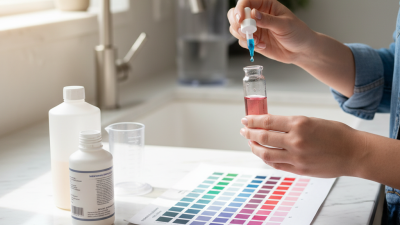
Most kits use reagent drops, test strips, or a color comparison method. With a drop-based kit, collect a fresh water sample in the supplied tube. Add the reagent one drop at a time. Swirl after every drop. The color changes when the reaction reaches its endpoint. Count the drops and convert them into ppm or grains per gallon. Simple, but not foolproof.

Clean sampling matters. Rinse the tube with the same water before testing. Avoid touching the sample with wet fingers. Test untreated water and softened water at similar times. This creates a practical comparison.

Strips are quick, yet their color blocks can be difficult to read under yellow kitchen lighting. Drop tests usually offer better control, although users can still stop one drop too early. That small mistake may change the maintenance decision.

Reliable Chinese test kit manufacturers should provide clear instructions, batch information, shelf-life dates, and quality checks. Look for kits suited to the expected hardness range. Very hard water may require dilution. Record the date, result, water source, and softener setting. Patterns over several tests are more useful than one attractive number.

Key Criteria for Evaluating Chinese Test Kit Manufacturers

China Top Water Softener Test Kit Manufacturers?

When evaluating Chinese water softener test kit manufacturers, start with measurement performance, not catalog size. Ask for detection ranges, accuracy data, and repeatability results for hardness testing. A reliable supplier should explain its testing method clearly. It should also provide batch records, calibration information, and certificates for critical materials. Traceability matters when a result affects resin replacement or household water quality decisions.

Request practical samples from different production lots. Test them with prepared hardness solutions and real tap water. Compare color changes, titration endpoints, reagent stability, and packaging quality. Check whether instructions remain clear under poor lighting. Short instructions help. Verify reagent shelf life, storage temperatures, and transport protection. A professional manufacturer should describe its quality control process, inspection frequency, and response time for defective kits. Factory audits or video inspections can reveal filling equipment, labeling controls, and staff training.

Do not judge suppliers by price alone. Low pricing may hide weak lot consistency or short reagent life. Ask about technical support, replacement policies, and production capacity during peak demand. Documentation should be accurate, readable, and consistent across samples and invoices. Some manufacturers provide impressive reports but explain little about failed tests. That is a warning sign. Still, no supplier is perfect; even experienced factories may need corrective action after field feedback. Record every result during evaluation, including small issues such as loose caps, unclear color charts, or delayed replies.

China Top Water Softener Test Kit Manufacturers? - Key Criteria for Evaluating Chinese Test Kit Manufacturers

Evaluation Dimension Objective Requirement Recommended Verification Data Weight Practical Benchmark
Testing Method Accuracy The kit should use a documented titration or test-strip method suitable for total water hardness. Method description, calculation formula, sample test record, and comparison with ASTM D1126 or ISO 6059 where applicable. 20% The stated method, endpoint color change, test volume, and reporting unit should be clear and repeatable.
Measurement Range and Resolution The measurable range must cover the hardness levels expected in residential, commercial, or industrial softener applications. Range, increment or detection limit, upper-range dilution instructions, and results expressed as mg/L or ppm as CaCO₃. 15% The range should be matched to the target water; the reporting unit should not be confused with German, French, or English hardness degrees.
Repeatability and Reproducibility Repeated tests should produce consistent results when the same operator follows the same instructions. Internal validation report covering repeated tests, different operators, sample preparation, and acceptance limits. 12% Require numerical repeatability data rather than an unsupported statement such as “high accuracy.”
Reagent Quality and Stability Reagents must have controlled composition, clear storage conditions, and a defined usable life. Batch number, certificate of analysis, manufacturing date, expiry date, storage temperature, and stability records. 12% Every reagent container should be traceable to a production batch and supplied with consistent labeling.
Quality Management System The manufacturer should operate documented procedures for design, purchasing, production, inspection, and corrective action. Valid ISO 9001 certificate, audit scope, inspection procedures, nonconformance records, and corrective-action process. 10% Verify that the certificate covers the relevant test kit or reagent production activity, not only an unrelated business scope.
Calibration and Traceability Measuring equipment used for product verification should be calibrated and linked to recognized reference standards. Calibration certificates, equipment identification numbers, calibration intervals, and laboratory accreditation details where available. 8% Prefer calibration evidence issued by or traceable to an ISO/IEC 17025-accredited laboratory.
Product Safety and Regulatory Documentation The kit and its chemical components should be documented for the destination market and intended use. Safety Data Sheet, ingredient or hazard information, transport classification, label artwork, and market-specific declarations. 8% Documentation should be supplied in the required language and updated when formulation or regulatory requirements change.
Packaging and Transport Protection Packaging should protect liquid, powder, or tablet reagents from leakage, moisture, light, and contamination. Packaging specification, sealing method, inner and outer carton details, transport test records, and damage inspection results. 5% Confirm that the received kit remains sealed, legible, and within its stated shelf life after normal international transport.
Customization and Documentation Support The manufacturer should be able to adapt language, packaging, instructions, test range, and private-label documentation without changing validated performance. Sample artwork, instruction manual, change-control procedure, minimum order quantity, prototype process, and approval timeline. 5% Any formulation, range, or component change should trigger documented validation before mass production.
After-Sales and Batch Traceability The supplier should provide technical support, complaint handling, replacement policy, and traceability throughout the product life cycle. Complaint-response procedure, batch recall process, retained-sample policy, warranty terms, and technical response contact. 5% A complete batch record should connect raw materials, production date, inspection results, packaging, and shipment documentation.
Recommended supplier-selection rule: Shortlist manufacturers that provide verifiable technical records, batch traceability, destination-market documentation, and independent or standards-based performance validation—not only catalog claims or low prices.

Leading Water Softener Test Kit Manufacturers in China

Leading Water Softener Test Kit Manufacturers in China

Leading water softener test kit manufacturers in China serve household, commercial, and water-treatment markets. Their strongest products combine clear instructions, stable reagents, and repeatable color changes. A practical kit often measures total hardness, calcium hardness, pH, and sometimes iron. Small details matter. A tight bottle cap prevents reagent evaporation during humid transport. Color charts should remain readable under ordinary workshop lighting. Manufacturers with real production experience usually control bottle molding, dropper accuracy, reagent filling, and final inspection through one traceable process.

When comparing suppliers, buyers should request recent batch records, calibration procedures, and sample test results. Ask how the factory verifies titrant concentration before shipment. Reliable manufacturers can explain shelf-life testing, storage limits, and replacement policies without vague promises. Look for documented quality systems and compliance files suitable for the destination market. Independent laboratory reports can support these claims, but they should match the exact kit model. A sample evaluation is useful: test the same water three times, compare readings, and record operator differences. Do not judge only by packaging. It is easy to overlook.

Field users may prefer simple color blocks, while technicians may need burettes and finer resolution. Custom labels, multilingual instructions, and private packaging are common requests. Still, customization can introduce printing or measurement errors. I would check every revised sample before approving a large order. No kit is perfect. Hardness interference, poor lighting, and expired reagents can distort results. Manufacturers that acknowledge these limits appear more trustworthy than those promising laboratory-level accuracy from a pocket kit.

Product Quality, Certifications, and Customization Options

Choosing China’s top water softener test kit manufacturers requires more than comparing prices. Product quality depends on repeatable hardness readings, stable reagents, clear color changes, and durable packaging. A reliable supplier should provide batch records, calibration procedures, shelf-life data, and sample-testing evidence. The 2024 WHO/UNICEF Joint Monitoring Programme reported that 2.2 billion people lacked safely managed drinking water in 2022. That pressure increases demand for practical field testing, but many product listings still provide weak technical evidence.

Certifications need careful interpretation. ISO 9001 supports quality management, but it does not prove test accuracy. ISO/IEC 17025 accreditation is more relevant when a supplier uses qualified testing laboratories. NSF/ANSI 44 applies mainly to residential cation-exchange water softeners, not automatically to test kits. CE marking may matter for electronic testers, depending on the product’s design and market. Ask for current certificates, scope statements, testing dates, and the issuing body. A certificate screenshot alone is not enough.

Tips: Request three production samples from separate batches. Compare results with a calibrated reference solution. Check reagent lot numbers, storage temperatures, and instructions in your target language. Customization may include hardness ranges, drop-count formats, private packaging, digital readers, and regional labels. However, customization can quietly reduce consistency. I would also test the translated instructions with real users; technical wording often looks correct but causes mistakes in the field. Industry reports show growing water-treatment demand, yet supplier claims should remain secondary to verified performance data.

How to Select the Right Chinese Manufacturer for Your Needs

Selecting a Chinese water softener test kit manufacturer requires more than comparing prices. The right partner should understand hardness testing, reagent stability, packaging, and user safety. Ask for technical datasheets, batch specifications, and clear testing procedures. Test the sample.

Request samples from several factories, then compare color changes, dropper accuracy, and result readability. A reliable manufacturer should explain calibration methods and acceptable tolerance ranges. Ask for records. Check whether the factory performs incoming-material inspections and final quality checks. Photos help, but an independent factory audit offers stronger evidence. If visiting is impossible, request timestamped production videos and anonymized inspection reports.

Communication also reveals practical experience. Can the team answer questions about storage temperature, shelf life, and transport damage? Can they customize labels without changing the testing chemistry? Confirm minimum order quantities, production lead times, replacement policies, and documentation before signing an agreement. I once focused too heavily on unit cost. That was a mistake. Inconsistent droppers created more customer complaints than the original savings justified. A polished website can still hide weak batch control. Check customer references carefully, especially those using similar water conditions. Do not rely on one successful sample; request samples from different production batches. A manufacturer that welcomes reasonable testing and admits limitations may be more dependable than one promising perfect results.

China Top Water Softener Test Kit Manufacturers? How to Select the Right Chinese Manufacturer for Your Needs

Use local water hardness to define the required test-kit range. The chart follows the commonly used hardness classification expressed as milligrams per liter of calcium carbonate (mg/L as CaCO₃).

When comparing Chinese manufacturers, prioritize kits that cover your measured hardness level, provide clear color-change instructions, include calibrated reagents, state shelf life and detection limits, and offer batch-level quality documentation.