What Is a Poultry Slaughter Line and Its Spare Parts?
A poultry slaughter line is an integrated sequence of equipment that moves birds through processing stages, from controlled transfer and stunning to scalding, defeathering, evisceration, washing, and chilling. Its design affects product consistency, worker access, hygiene, and the smooth flow of production. Animal-behavior expert Temple Grandin has said, “I think using animals for food is an ethical thing to do, but we’ve got to do it right.” Her statement is a broad principle, not a machine specification, but it highlights why careful equipment design and handling matter.
The phrase Poultry Slaugtering Line And Spare Parts covers both the main processing equipment and the replaceable components that keep it operating. These can include conveyor chains, shackles, bearings, sprockets, scalder nozzles, defeathering fingers, sensors, and seals. Each part has a practical role. A worn bearing can cause vibration; a damaged defeathering finger may leave uneven results. Small parts matter.
Reliable operation depends on matching components to the line’s model, operating conditions, and maintenance plan. Teams commonly inspect wear points, listen for unusual sounds, and keep suitable replacement parts available. Yet a parts list alone cannot prevent every interruption. Fit, installation, cleaning routines, and staff training also matter. Not glamorous, but essential. This introduction offers a useful starting point, though actual equipment requirements vary by plant and should be confirmed with the manufacturer or a qualified processing engineer.
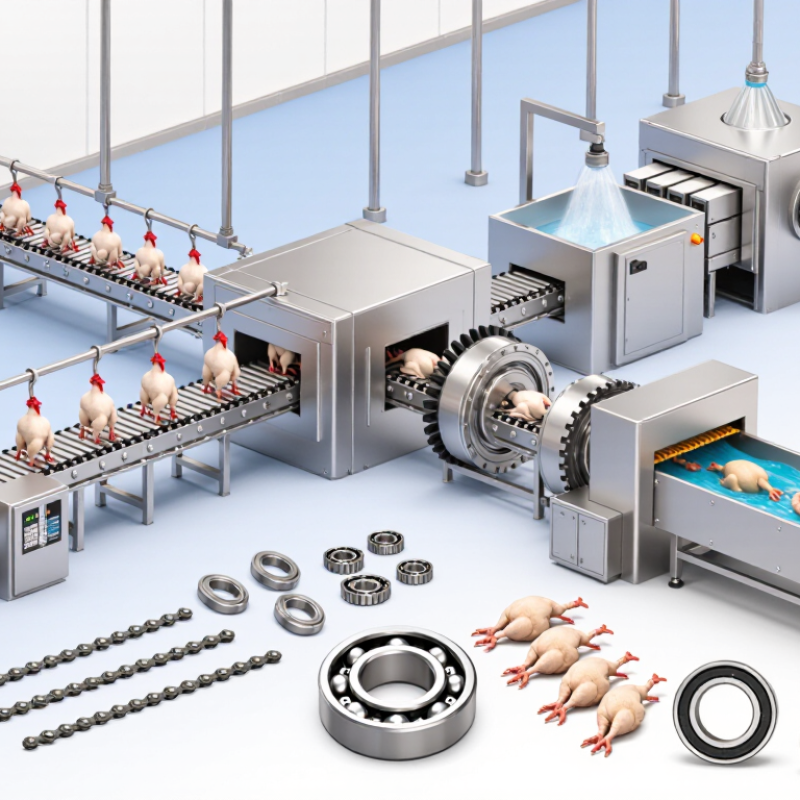
What a Poultry Slaughter Line Does: From Live-Bird Intake to Chilling
A poultry slaughter line moves birds through linked stations, from live-bird intake to chilled carcasses. At intake, workers unload transport crates and check flock records and bird condition. Birds are then hung on a moving line, humanely stunned, and bled before scalding and defeathering. Warm water loosens feathers; rotating rubber fingers remove them. The line’s pace matters, but so does careful handling.
After defeathering, workers remove internal organs, inspect carcasses, and wash them. Equipment must be adjusted to bird size. Poorly aligned tools can damage carcasses or leave feathers behind. Chilling follows quickly, using cold water, air, or a combination. It lowers product temperature and helps control microbial growth. Small details matter here: water flow, contact time, and monitoring records.
For a concrete benchmark, USDA FSIS regulation 9 CFR 381.66 requires poultry carcasses in the United States to reach 40°F or below within four hours for birds under four pounds, six hours for birds weighing four to eight pounds, and eight hours for heavier birds. These limits are not universal requirements, but they show why chilling is a controlled process, not just a cold-room step. Even a well-designed line can drift out of control. People still need to check it.
Processing Stages and Equipment: Stunning, Scalding, Plucking, and Evisceration
A poultry slaughter line carries birds through a sequence of controlled processing stages. At stunning, equipment applies a consistent treatment while operators check bird positioning and line movement. Poor alignment can lead to uneven results, so this stage needs regular observation. Small details matter.
Scalding loosens feathers through warm water, with temperature and dwell time adjusted to the process. Plucking machines then use flexible rubber fingers to remove feathers as carcasses pass through rotating equipment. Fingers that are worn, cracked, or set too firmly may damage skin or leave feathers behind. No single setting suits every flock, which makes careful adjustment important.
During evisceration, tools open the carcass and remove internal organs while workers monitor cleanliness and equipment performance. Knives, guides, seals, bearings, shackles, and plucker fingers are common replacement parts. A spare part should match the equipment and fit securely; improvised replacements can create uneven operation. Routine inspection helps catch loose fasteners, worn surfaces, or leaks before they disrupt the line. It is easy to focus on speed and overlook small wear. That deserves a second look.
Scalding Data: Typical Water Temperatures Range from 50°C to 60°C
What Is a Poultry Slaughter Line and Its Spare Parts?
Scalding Data: Typical Water Temperatures Range from 50°C to 60°C
A poultry slaughter line moves birds through processing stages, including scalding before feather removal. Scalding water commonly operates between 50°C and 60°C, but the right setting depends on bird size, feather condition, line speed, and the desired result. Even a small temperature change can affect how easily feathers release. Excessive heat or exposure may damage the skin, while insufficient scalding can leave feathers behind.
Reliable control takes more than reading a display. Operators should check water temperature at several points in the tank, since circulation and incoming cold water can create uneven zones. A calibrated thermometer helps verify built-in sensors. Pumps, valves, sensor probes, and conveyor components are common parts that may need inspection or replacement. It is easy to trust the display too much; real conditions can differ. That deserves a second check.
Tips: Record temperature and dwell time during each shift. Watch for persistent cold spots, and inspect circulation when readings vary. Follow the equipment maker’s operating guidance and applicable food-safety requirements; the range is a reference, not a universal setting. Be prepared to adjust carefully, then verify the feather-removal result.
Essential Spare Parts: Shackles, Plucker Fingers, Blades, Seals, and Bearings
A poultry slaughter line moves birds through controlled stages, from shackling and scalding to plucking and further processing. Its spare parts are small, but their condition affects product quality, hygiene, and uptime. USDA Economic Research Service data reports about 46.1 billion pounds of U.S. broiler production in 2023. At that scale, a worn component can quickly disrupt a shift.
Shackles carry birds through the line, so check welds, hooks, and spacing for damage or buildup. Plucker fingers need the right flexibility: stiff fingers can tear skin, while worn ones leave feathers behind. Replace blades when edges dull or develop nicks, and inspect seals for cracks that allow leaks or contamination. Bearings deserve regular attention too. Heat, noise, or excess play can signal failure before a conveyor stops. Small warning signs matter.
FAO’s World Food and Agriculture Statistical Yearbook reports global poultry meat production at roughly 142 million tonnes in 2022. That scale makes consistent spare-part inspection more than routine housekeeping. Keep replacements matched to machine specifications, and record when parts were changed. A practical detail often overlooked: cleaning chemicals and water can shorten seal life. Maintenance plans still miss things. Review wear patterns with operators; their observations may reveal problems that a calendar alone cannot.
What Is a Poultry Slaughter Line and Its Spare Parts?
Essential spare parts: shackles, plucker fingers, blades, seals, and bearings.
Each bar represents one distinct spare-part type named in this overview, grouped by its primary function. The chart shows categories, not the quantity required or replacement frequency for a particular processing line.
USDA FSIS Chilling Limits: 4.4°C Within 4, 6, or 8 Hours by Carcass Weight
A poultry slaughter line links shackles, a scalder, defeathering equipment, evisceration stations, and a chiller. Each section affects how quickly a carcass cools. Chiller capacity, water movement, bird spacing, and carcass size all matter. Small birds cool faster.
USDA FSIS sets weight-based chilling limits in the Poultry Products Inspection Regulations, 9 CFR §381.66. Carcasses weighing 4 pounds or less must reach 40°F (4.4°C) within 4 hours. Carcasses over 4 pounds and up to 8 pounds have 6 hours. Those over 8 pounds have 8 hours. These are maximum time limits, not suggested operating targets. That gap matters. A line should leave room for uneven loading, warm incoming carcasses, and brief equipment interruptions.
Operators can track chiller conditions and verify carcass temperatures with calibrated instruments. Water temperature alone does not confirm that the warmest parts of every carcass have cooled adequately. Real lines are less tidy than a chart. Records should connect carcass weights, chilling times, and temperature checks, so a missed limit can be investigated rather than guessed at.
What Is a Poultry Slaughter Line and Its Spare Parts? — USDA FSIS Chilling Limits: 4.4°C Within 4, 6, or 8 Hours by Carcass Weight
A poultry slaughter line is a sequence of equipment and workstations used to process birds into inspected carcasses and parts. The table below summarizes common line stages, typical replaceable components, and the carcass chilling schedule described in 9 CFR 381.66.
| Line Stage | Main Equipment | Typical Spare or Wear Parts | Purpose |
| Live-bird receiving and transfer | Unloading area, shackles, overhead conveyor | Shackle links, pins, conveyor bearings, drive-chain links | Moves birds through the line in a controlled manner. |
| Stunning and bleeding | Stunning equipment, bleed rail, blood trough | Electrodes or contact parts, rail hardware, trough components, seals | Supports the plant’s approved humane-handling and bleeding procedures. |
| Scalding and defeathering | Scald tank, pumps, pickers | Picker fingers, finger retainers, pump seals, nozzles, bearings | Prepares the carcass for feather removal and downstream processing. |
| Evisceration and inspection | Opening and evisceration equipment, inspection station, wash equipment | Cutting blades, guide parts, water nozzles, seals, conveyor bearings | Removes viscera and supports inspection and sanitation controls. |
| Chilling | Immersion chiller or air-chilling system, pumps, temperature sensors | Pump impellers, seals, spray nozzles, sensor probes, conveyor components | Cools carcasses to the applicable time-and-temperature limit. |
| Cut-up, weighing, and packing | Cutters, scales, conveyors, packaging equipment | Blades, belts, rollers, scale components, sealing elements | Prepares chilled product for portioning, weighing, and packaging. |
Poultry Carcass Chilling Limits by Carcass Weight
| Carcass Weight Category | Maximum Time to Reach 4.4°C (40°F) | Temperature Check |
| Less than 1.8 kg (4 lb) | Within 4 hours | Verify the internal temperature reaches 4.4°C (40°F) or below. |
| 1.8–3.6 kg (4–8 lb) | Within 6 hours | Verify the internal temperature reaches 4.4°C (40°F) or below. |
| More than 3.6 kg (8 lb) | Within 8 hours | Verify the internal temperature reaches 4.4°C (40°F) or below. |
Note: The chilling schedule is based on carcass weight and internal carcass temperature. Facilities should confirm the current regulatory text and apply their HACCP plan and applicable inspection requirements. Equipment parts listed above are generic examples; replacement intervals depend on operating conditions, sanitation practices, and manufacturer specifications.