2026 How to Choose the Best Water Test Kit for Your Needs?
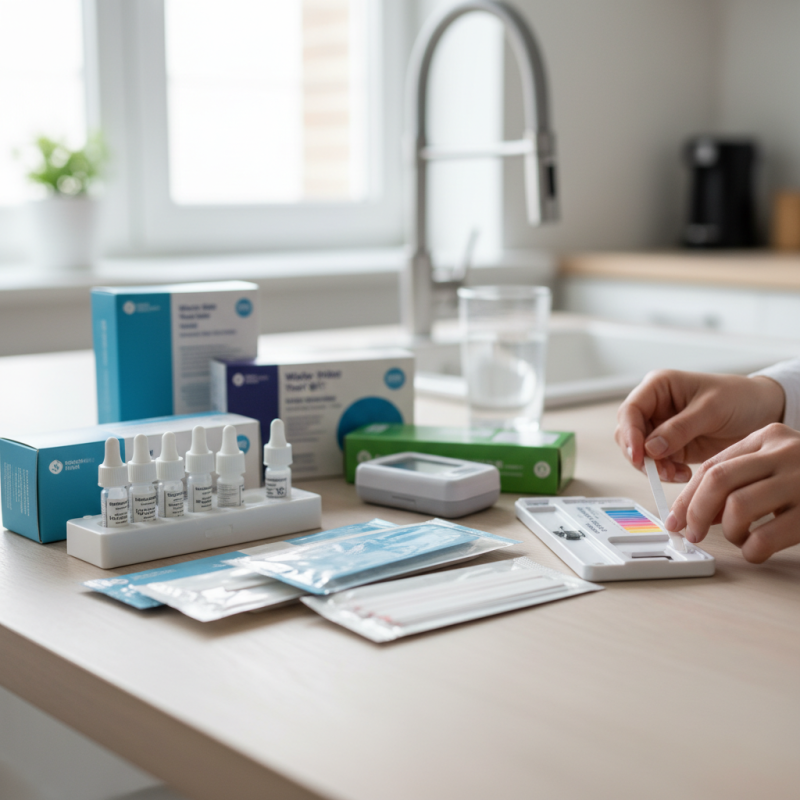
Choosing the right water test kit can feel overwhelming. Many options are available, each promising different results. It's crucial to select a kit that meets your specific needs.
Consider your water source. Is it well water or municipal supply? Each source may have unique contaminants. Knowing what you want to test for is vital. Some kits test for common pollutants like lead or bacteria. Others provide broader analysis.
Take your time evaluating features. Some kits are user-friendly, while others might require more expertise. Reviewing instructions can save potential mistakes. Pay attention to how results are reported. Clear, concise data is essential for understanding your water quality. Ultimately, the right water test kit will empower you to make informed decisions about your health.
Understanding the Importance of Water Quality Testing
Water quality testing is vital for health and safety. According to the U.S. Environmental Protection Agency (EPA), contaminants such as lead, bacteria, and nitrates can significantly affect water safety. As many as 10% of wells contain contamination that exceeds safe levels. Regular testing helps identify these issues early, ensuring that families are drinking safe water.
Understanding what to test for can be confusing. Not all kits measure the same parameters. Some focus on pH levels, while others test for specific contaminants. Homeowners often overlook the importance of testing. A study from the CDC found that many people believe their water is safe without testing it. This misconception can lead to serious health risks.
Visualizing the quality of your water can be eye-opening. When testing reveals high levels of contaminants, it raises questions. How did this happen? What can be done? These reflections are crucial for improving water safety. Individuals must take an active role in monitoring their water quality. Ignorance is not bliss when it comes to water safety.
Understanding Water Quality Testing Parameters
This chart represents the levels of various contaminants commonly tested in drinking water. Understanding these levels helps in choosing the right water test kit for your needs.
Types of Water Test Kits Available in the Market
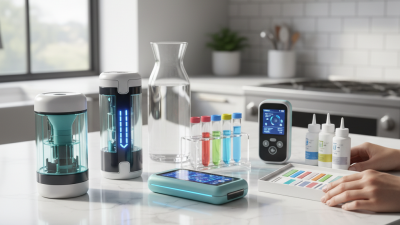
When selecting a water test kit, it’s vital to understand the types available on the market. Different kits serve various purposes. Some test for common contaminants like bacteria and nitrates, while others look for specific chemicals like lead or chlorine.
A report by the Environmental Protection Agency highlights that 90% of U.S. water supplies do not undergo adequate testing. As a result, many households may unknowingly consume unsafe water. Basic kits often measure pH, total dissolved solids, and hardness. However, advanced kits can test for more than 50 contaminants, providing a clearer picture of water quality.
It’s crucial to reflect on your water source. Well water may carry different risks compared to municipal supplies. Limited knowledge can lead to poor choices. A kit that tests for a wide array of pollutants could offer peace of mind but might also overwhelm users with too much data. Balancing thoroughness with usability is key in choosing the right kit.
2026 How to Choose the Best Water Test Kit for Your Needs? - Types of Water Test Kits Available in the Market
| Type of Water Test Kit |
Parameters Tested |
Accuracy |
Ease of Use |
Price Range (USD) |
| pH Test Kit |
pH Level |
±0.1 |
Easy |
$10 - $30 |
| Chlorine Test Kit |
Free and Total Chlorine |
±0.2 ppm |
Moderate |
$15 - $25 |
| Lead Test Kit |
Lead Concentration |
±5 ppb |
Moderate |
$20 - $40 |
| Nitrate Test Kit |
Nitrate Levels |
±1 ppm |
Easy |
$10 - $25 |
| Bacteria Test Kit |
Coliform Bacteria |
Varies |
Moderate |
$30 - $60 |
Key Factors to Consider When Choosing a Test Kit
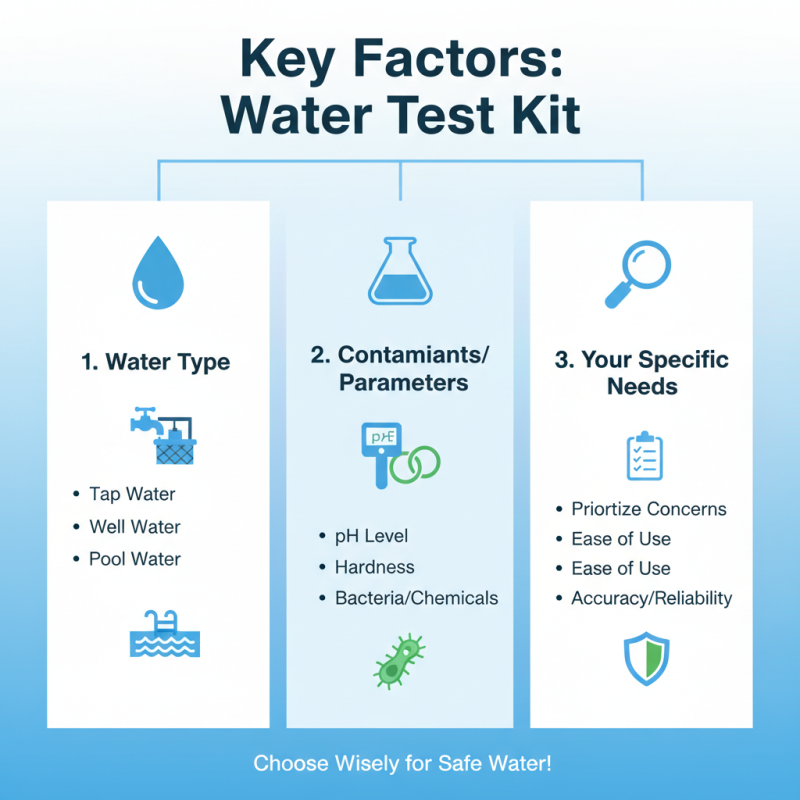
When choosing a water test kit, consider your specific needs. Think about the type of water you want to test—tap, well, or pool water. Each type may have different contaminants. A kit designed for well water may not suit your needs for testing pool water. Do you need to check for pH levels, hardness, or harmful bacteria? Prioritize the parameters that are most important to you.
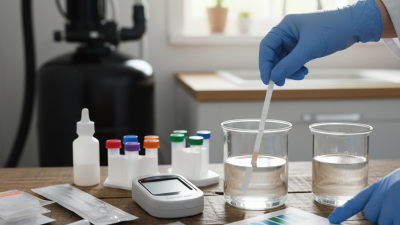
Read labels carefully. Some kits may only test for a few contaminants, while others cover a broader range. Transparency in the testing process is crucial. Ensure that the kit provides clear instructions and reliable results. You don't want to end up with misleading data. Many kits use strips, while others require water samples for laboratory testing. Each method has pros and cons that should align with your comfort level and accuracy requirements.
Budget is another key factor. High-priced kits might not always mean better quality. However, investing a little more can sometimes yield more accurate results. Don't rush your decision; take time to compare options. Some kits may not include everything you need, such as reagents or comparison charts. Reflect on these details to ensure you make the best choice for your water testing journey.
Interpreting Test Results: What You Need to Know
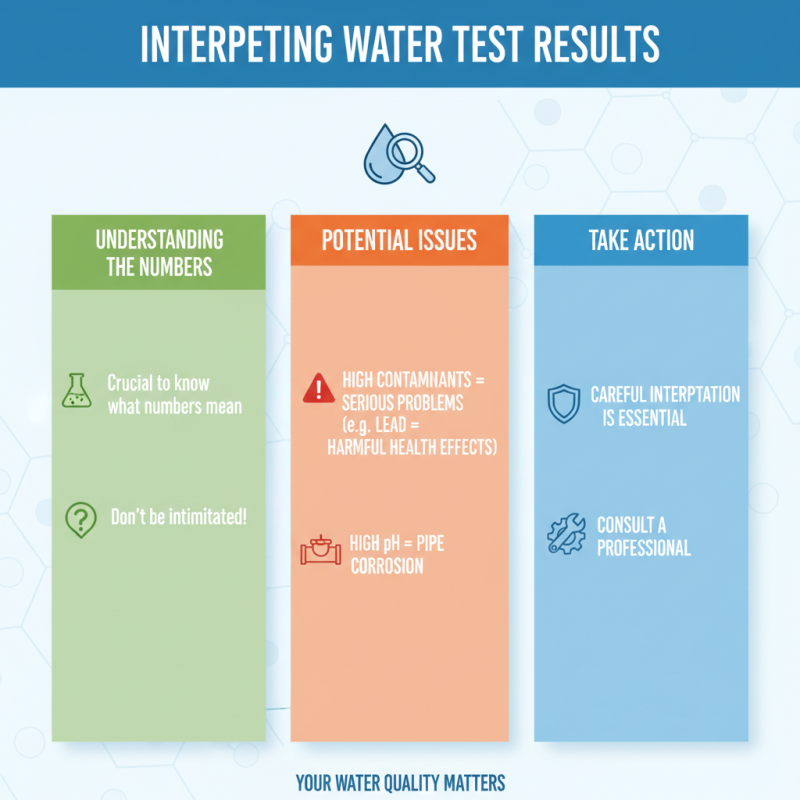
When you receive your water test results, they can be a bit intimidating. Understanding what these numbers mean is crucial. High levels of contaminants can indicate serious issues. For example, elevated lead levels can be harmful. Additionally, high pH levels may cause corrosion in pipes. It’s essential to interpret these figures carefully.
Tips: Keep a notebook handy. Write down your results and research necessary actions. Compare your results with the recommended safety levels. Websites often provide helpful comparisons. If a contaminant is above the safe threshold, consider retesting. It can confirm any anomalies.
Watch for signs in your water as well. Is there discoloration? Does it taste odd? These might not show up on tests. Sometimes intuition plays a role in bringing attention to these invisible dangers. Remember, no test is perfect. Results can vary based on collection methods or sample age. Always question uncertainties in what you find.
Comparing Costs and Features of Popular Water Test Kits
When choosing a water test kit, understanding costs and features is crucial. Several reports indicate that the average cost of home water testing ranges from $15 to $300. This variation largely depends on the kit's capabilities. Basic kits test for chlorine and pH levels. More advanced options can analyze heavy metals and bacteria. Some kits offer digital readouts, while others rely on colorimetric methods.
Consumers need to evaluate what they truly require. A simple kit may suffice for everyday use. More comprehensive kits can safeguard against contaminants. According to industry data, about 60% of households in urban areas face water quality issues. Choosing the right kit can give peace of mind. However, it’s essential to recognize limitations in testing accuracy. Many kits might miss subtle contaminants. For example, lead may not show up if only specific parameters are tested.
Price isn't everything. A cheaper kit could provide quick results but might lack depth. Some mid-range kits feature mobile app integration, offering more insights. Others might include laboratory follow-up tests for comprehensive analysis. Reflecting on these options helps to determine the best fit for personal water quality needs. Balancing cost, features, and specific testing requirements is vital for making an informed decision.