

How to Find China Top Gold Silver Testing Services?
Finding China’s top Gold Silver Testing services requires more than comparing prices or polished websites. A reliable laboratory should demonstrate technical competence, transparent procedures, and experience with precious-metal materials. Look for ISO/IEC 17025 accreditation, plus relevant CNAS or CMA recognition where applicable. These credentials do not replace careful evaluation. They provide a useful starting point.
Ask how the laboratory identifies purity, composition, and possible plating. Common methods include X-ray fluorescence screening, fire assay, and other validated analytical techniques. Each method has limits. XRF can quickly examine a marked surface, while fire assay may provide stronger evidence for certain gold samples. The best provider explains these differences clearly. Details matter. A serious service should record sample weight, condition, seal numbers, testing dates, and method settings. Request a formal report with the laboratory’s accreditation scope, uncertainty information, authorized signature, and contact details. Bilingual documentation can reduce misunderstandings during international procurement.
Practical experience also matters. Before sending valuable samples, confirm packaging rules, insurance responsibilities, turnaround times, and sample-return procedures. Ask whether the laboratory accepts bars, jewelry, coins, powders, or industrial materials. Some providers may advertise broad capabilities but lack accreditation for every material or test. That gap deserves attention. Independent laboratories, recognized inspection companies, and established industry referrals can help you compare candidates objectively. Still, no laboratory is perfect. Reports should be reviewed critically, especially when results differ from supplier claims. Choosing a compliant, technically qualified Gold Silver Testing partner protects purchasing decisions and supports traceable, evidence-based trade.
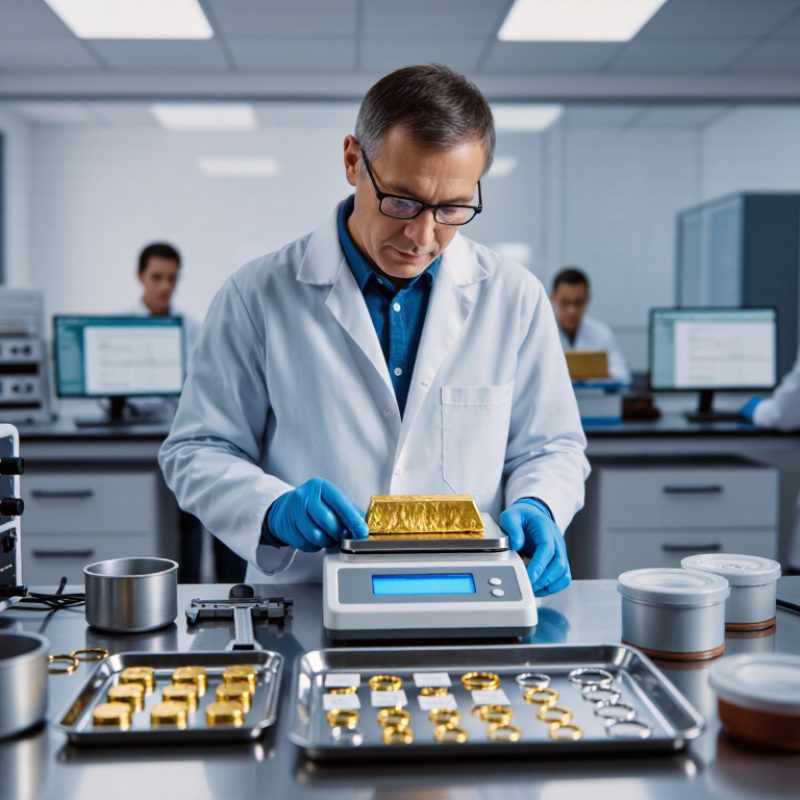
Understanding Gold and Silver Testing Services in China
China’s gold and silver testing services support importers, manufacturers, refiners, and private buyers. Reliable laboratories usually combine fire assay, X-ray fluorescence, and inductively coupled plasma analysis. Each method answers a different question. XRF quickly checks surface composition, while fire assay offers stronger accuracy for gold content. ICP analysis can identify trace elements in complex samples.
Industry data shows why testing matters. The World Gold Council’s Gold Demand Trends 2023 reported global gold demand of about 4,899 tonnes, including over-the-counter transactions. The Silver Institute’s World Silver Survey 2024 recorded industrial silver demand of 654.4 million ounces in 2023. China’s manufacturing activity makes independent verification especially useful. A stamped result alone may not reveal plating, uneven alloys, or sampling errors. This is where I remain cautious. Even good laboratories can produce weak results from poor samples.
Tips: Ask for accreditation, test standards, sample photographs, and a complete laboratory report. Confirm whether the service uses GB/T, ISO, or internationally recognized procedures. Request duplicate testing for high-value materials. Compare the stated purity with the measured result, not only the certificate number. Keep chain-of-custody records from collection to reporting. A fast test is convenient, but speed should never replace sampling quality.
How to Find China Top Gold Silver Testing Services? - Understanding Gold and Silver Testing Services in China
| Testing Service | Main Purpose | Common Methods | Suitable Materials | Typical Turnaround | Typical Report Information |
|---|---|---|---|---|---|
| Gold Fineness Testing | Determines the gold content and verifies the declared purity. | Fire assay, X-ray fluorescence screening, or chemical analysis. | Bars, coins, jewelry, grains, powders, and industrial components. | Approximately 1–5 working days, depending on the method and sample condition. | Gold percentage, fineness in parts per thousand, test method, sample identification, and measurement uncertainty where applicable. |
| Silver Purity Testing | Measures the silver content in products, alloys, and raw materials. | Titration, fire assay, X-ray fluorescence, or instrumental chemical analysis. | Silver bars, jewelry, tableware, solder, scrap, and industrial materials. | Approximately 1–5 working days. | Silver concentration, detected alloying elements, method reference, and sample traceability details. |
| Precious-Metal Alloy Analysis | Identifies the composition of gold- or silver-based alloys. | X-ray fluorescence, inductively coupled plasma analysis, or atomic absorption analysis. | Manufacturing alloys, jewelry alloys, solder, semi-finished products, and recycled metals. | Approximately 2–7 working days. | Quantitative results for major and trace elements, detection limits, and analytical conditions. |
| Precious-Metal Plating Thickness | Measures the thickness and, where required, composition of gold or silver coatings. | X-ray fluorescence, microscopic cross-section analysis, or coulometric methods. | Electronic connectors, decorative hardware, jewelry, watches, and industrial parts. | Approximately 3–7 working days. | Coating thickness, coating composition, test location, substrate information, and measurement conditions. |
| Precious-Metal Identification | Screens an item to determine whether gold, silver, or other precious metals are present. | X-ray fluorescence screening, density testing, magnetic response, and visual examination. | Unmarked jewelry, scrap, plated items, metal pieces, and incoming materials. | Same day to 2 working days for non-destructive screening. | Screening result, estimated composition, limitations of the method, and recommendation for confirmatory testing. |
| Fire Assay | Provides a highly established quantitative assay for gold and selected precious metals. | Fusion, cupellation, collection of precious-metal beads, and instrumental finish analysis. | Ores, concentrates, bullion, recycling materials, and homogeneous metal samples. | Approximately 3–10 working days. | Assay value, sample preparation record, reported units, method details, and quality-control information. |
| Impurity and Restricted-Substance Testing | Checks for unwanted elements or substances that may affect safety, quality, or regulatory compliance. | ICP-OES, ICP-MS, atomic absorption, or other validated elemental methods. | Jewelry, consumer products, plating solutions, alloys, and recycled materials. | Approximately 3–10 working days. | Element concentrations, reporting limits, applicable acceptance criteria, and compliance interpretation when requested. |
| Sampling and Homogeneity Assessment | Ensures that the submitted portion accurately represents the full batch or shipment. | Random sampling, duplicate testing, batch subdivision, and statistical comparison. | Bulk scrap, concentrates, granules, powders, bars, and mixed production lots. | Approximately 2–7 working days, excluding complex preparation. | Sampling plan, sample weight, number of increments, homogeneity observations, and retained-sample information. |
| Certificate and Report Review | Confirms whether a test report contains sufficient technical and traceability information. | Document review against the requested specification, method, and reporting requirements. | Supplier reports, inspection documents, batch certificates, and laboratory results. | Approximately 1–3 working days. | Verification of sample identity, test method, units, uncertainty, accreditation status, signatures, and document consistency. |
Note: Turnaround times are indicative working-day ranges commonly used for planning. Actual timing, sample quantity, preparation requirements, applicable standards, and pricing should be confirmed with the selected testing laboratory before submission.