China Top FIBC Bags Manufacturer for Global Buyers
China has become a major sourcing base for flexible industrial packaging, especially for exporters requiring consistent FIBC bags at scale. A qualified Fibc Bags Manufacturer should offer more than low pricing. It should control polypropylene selection, weaving tension, stitching strength, cleanliness, and shipment documentation.
Industry research supports this demand. MarketsandMarkets’ Flexible Intermediate Bulk Container Market report identifies chemicals, agriculture, food, construction materials, and pharmaceuticals as important application sectors. Its analysis also points to continued market growth, driven by bulk transport efficiency and reusable packaging needs. Smithers’ flexible packaging research highlights sustainability, downgauging, recyclability, and supply-chain performance as major purchasing considerations. These trends are visible in practical details: stronger corner loops, dust-proof seams, laminated surfaces, and accurate discharge spouts can reduce product loss during loading and unloading.
Performance matters.
A reliable Chinese supplier should provide batch records, load-testing evidence, inspection procedures, and clear material specifications. ISO 21898 is widely referenced for flexible intermediate bulk containers, while food-contact and chemical-packaging requirements vary by destination and application. Buyers should verify each claim through samples, factory audits, and independent testing. Certificates alone are not enough.
No manufacturer is flawless. Even experienced factories may face color variation, delayed raw materials, or stitching inconsistencies. The better partner is transparent about these risks and shows how corrective actions are managed. For global buyers, the right Fibc Bags Manufacturer combines engineering experience, documented quality control, responsible sourcing, and responsive export service. That balance protects both cargo and reputation.
FIBC Bags: Definition, Uses, and Key Specifications
China Top FIBC Bags Manufacturer for Global Buyers
FIBC Bags: Definition, Uses, and Key Specifications
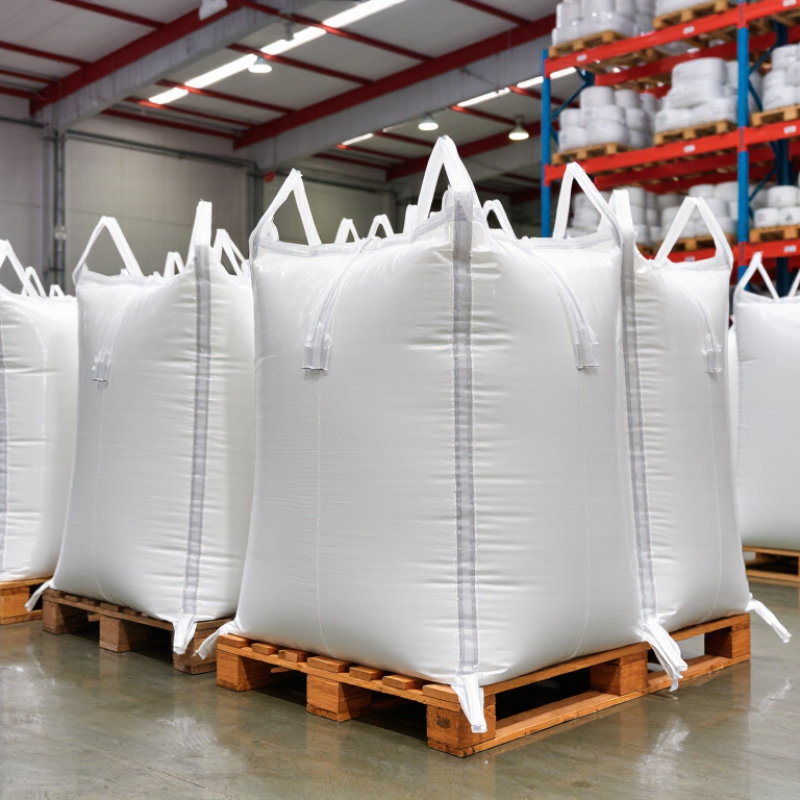
Flexible Intermediate Bulk Containers, or FIBC bags, are woven polypropylene containers for dry bulk materials. They commonly hold powders, granules, agricultural products, minerals, and construction materials. Their flexible structure saves warehouse space when empty. A standard bag may carry between 500 and 2,000 kilograms, depending on its design.
Key specifications include safe working load, safety factor, dimensions, fabric weight, lifting loops, and filling options. A four-loop design suits forklift handling, while corner loops support controlled lifting. Top openings may be open, duffle, or spout styles. Bottom discharge spouts can reduce dust and product loss during unloading. Liners help protect moisture-sensitive contents, but they should not replace proper storage conditions.
Real-world selection requires more than checking capacity. The material’s density, flow behavior, filling method, and transport distance all matter. UV protection may be necessary for outdoor exposure. Conductive or antistatic construction can support controlled industrial environments when properly specified. Each batch should receive visual checks, dimensional inspection, seam review, and load testing. Small stitching defects can become serious under pressure. A common mistake is choosing by size alone. No specification is perfect without application data. Clear testing records and traceable production controls help global buyers make safer decisions.
FIBC Bags: Common Rated Capacities for Global Bulk Handling
Flexible Intermediate Bulk Containers (FIBC bags), also known as bulk bags, are designed to store and transport dry, flowable materials such as powders, granules, agricultural products, minerals, and construction materials. Common rated capacities range from 500 kg to 2,000 kg, depending on the bag construction, dimensions, fabric strength, lifting loops, liner, and safety factor.
The exact Safe Working Load (SWL) must always be confirmed from the product label, technical specification, and certification. Capacity is not determined by bag size alone.
China’s FIBC Manufacturing Industry and Global Market Role
China’s FIBC manufacturing industry supports global supply chains for food ingredients, minerals, chemicals, agriculture, and construction materials. Grand View Research estimates the global FIBC market reached about USD 7.2 billion in 2023. It also projects a compound annual growth rate of roughly 6.1% through 2030. China remains a major production and exporting base. UN Comtrade data places China among the leading exporters under HS 630533, covering flexible sacks made from polyethylene or polypropylene strips.
Production scale matters, but consistency matters more. Experienced factories inspect polypropylene tape width, fabric weight, seam strength, and lifting-loop alignment. A 1,000-kilogram bag may look simple. It is not. Minor stitching variation can affect filling, stacking, and unloading safety. Reliable suppliers normally use batch records, tensile testing, dimensional checks, and documented material declarations. ISO 21898 provides a useful technical reference for these packaging requirements. Buyers should also verify food-contact suitability when handling regulated food materials.
Price comparisons can mislead. Very low offers may reflect thinner fabric, weaker loops, or limited inspection. That risk deserves attention. Market estimates also differ because reports define FIBCs differently. This is an imperfect industry measurement. Global buyers should compare specifications, test evidence, production experience, and delivery records together. China’s role is therefore not only about volume. It increasingly depends on process control, customization, port connectivity, and dependable communication across long-distance orders.
Quality Control, Certifications, Packaging, and Export Services
For global buyers, FIBC quality starts with controlled production, not attractive photographs. Grand View Research estimates the global FIBC market could reach about USD 8 billion by 2030, supported by demand from agriculture, chemicals, construction, and food processing. This growth increases pressure on suppliers to prove consistency. Our production checks cover fabric weight, seam strength, lifting loops, dimensions, and filling performance. Each batch should have traceable records. Small deviations still happen. Honest inspection matters more than perfect claims.
Certifications provide useful evidence when they match the application. ISO 9001 supports documented quality management, while ISO 21898 addresses the construction and testing of flexible intermediate bulk containers. For food-related shipments, buyers should request relevant food-contact documentation and migration test reports. Independent laboratories can verify tensile strength, UV resistance, and safe working load. A 2023 Smithers packaging report also highlights traceability and compliance as major purchasing priorities. Certificates alone are not enough.
Packaging must protect bags from moisture, dust, compression, and port handling. We use folded units, inner liners when required, woven wrapping, and clear pallet labels. Export documents should match the packing list, invoice, and shipment marks. Photos before loading create practical evidence. Container loading plans reduce wasted space and shifting risks. However, packaging is not always perfect; humid routes and rough unloading can expose weak points. Feedback from buyers should return to production, not disappear in an email thread.