What Is the Best Water Hardness Test Kit in China?
Choosing the best water hardness test kit in China requires more than comparing prices, package sizes, or online ratings. A reliable kit should produce clear results in apartments, factories, laboratories, and rural homes. It should also explain whether hardness comes mainly from calcium, magnesium, or both.
Dr. Joseph Cotruvo, a respected drinking-water quality expert and former U.S. EPA official, states, “Hardness is not a health concern.” This perspective matters. Hard water can leave white scale inside kettles, showerheads, boilers, and coffee machines, but it is not automatically unsafe. A practical water hardness test kit should therefore support accurate maintenance decisions, not create unnecessary alarm.
The strongest options usually combine simple instructions, fresh reagents, readable color changes, and dependable calibration information. Titration kits can offer better precision than basic test strips, especially when water hardness changes gradually. Still, precision is not everything. A kit that takes ten minutes and requires confusing drops may fail in a busy household. That is easy to overlook.
For Chinese buyers, local water conditions also deserve attention. Municipal water, well water, and filtered water may show very different readings within the same city. A useful kit should provide results in familiar units, such as mg/L as calcium carbonate or ppm. It should include enough tests for repeated checking and protect reagents from heat and moisture. Some inexpensive kits look professional but provide vague instructions. That weakness matters.
This guide compares testing accuracy, usability, reagent stability, measurement range, and after-sales support. It also considers an imperfect reality: no single kit is ideal for every user. The best choice depends on why you are testing, how often you test, and how much uncertainty you can accept.

What Is Water Hardness and Why Does It Matter in China?
Water hardness describes the amount of dissolved calcium and magnesium in water. It is commonly reported as milligrams per liter of calcium carbonate. In China, hardness can differ sharply between regions. Northern cities often rely more on groundwater, which may collect minerals from underground rock. Some southern areas receive softer rain-fed water, although local geology can change the result.
Hard water is not automatically unsafe to drink. However, it can leave white scale inside kettles, showerheads, pipes, and heating systems. Soap may produce less foam, while laundry can feel rough after washing. In factories, untreated hardness may reduce boiler efficiency and increase maintenance costs. These effects make accurate testing useful at home, in hotels, and during water-treatment inspections.
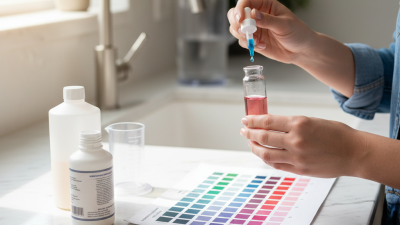
A practical hardness test kit should include clear instructions, sealed reagents, and an easy-to-read measurement scale. Titration kits usually provide more useful detail than simple color strips, but user technique still matters. Count each drop carefully. Read the color under neutral light. Do not test immediately after adding cleaning chemicals. A home result is only a screening result, not a laboratory certificate. Testing the same tap on different days can also reveal changes that one measurement misses. This is where many recommendations become too confident. A kit may be convenient, yet its accuracy depends on storage, expiry dates, water temperature, and careful handling. Record the date, location, and result beside each test.
What Is the Best Water Hardness Test Kit in China? - What Is Water Hardness and Why Does It Matter in China?
| Test Kit Type |
Typical Measuring Range |
Typical Resolution |
Testing Time |
Main Advantages |
Main Limitations |
Best Use in China |
| EDTA Drop-Count Titration Kit |
Approximately 0–500 mg/L as CaCO3 |
Commonly 5–25 mg/L as CaCO3, depending on the sample volume and reagent concentration |
About 2–5 minutes |
Low operating cost; suitable for tap water, wells, boilers, and water-treatment checks; results are based on a recognized complexometric titration principle |
Requires careful endpoint identification and clean glassware; strongly colored or chemically treated samples may affect visual interpretation |
Best overall choice for routine household, property-management, and small water-treatment testing |
| Hardness Test Strips |
Typically about 0–1,000 mg/L as CaCO3 |
Usually 25–100 mg/L as CaCO3, depending on the color scale |
About 30–60 seconds |
Fast, portable, inexpensive, and simple for screening |
Color matching is subjective; broad color blocks provide less precise results than titration |
Quick checks for homes, hotels, offices, and initial evaluation of water-softener performance |
| Digital Photometer Kit |
Commonly about 0–500 mg/L as CaCO3, with model-dependent ranges |
Often about 1–10 mg/L as CaCO3, depending on the instrument and method |
About 3–10 minutes |
Objective electronic reading; useful for repeated measurements and record keeping |
Higher purchase cost; needs batteries, reagent control, cuvette cleaning, and periodic verification |
Professional maintenance teams, laboratories, hotels, and facilities requiring digital records |
| Laboratory EDTA Titration |
Adjustable to low or high hardness through sample dilution |
Can achieve low-mg/L reporting when performed with validated laboratory procedures |
About 10–30 minutes, excluding preparation and quality control |
Higher accuracy and traceability; suitable for quality-control work and method verification |
Requires trained personnel, calibrated equipment, standardized reagents, and documented procedures |
Certified laboratories, municipal water projects, industrial water analysis, and dispute resolution |
| Electronic Conductivity Meter |
Measures electrical conductivity rather than hardness directly |
Depends on calibration and the relationship between conductivity and the sample’s ion composition |
Usually less than 1 minute |
Very fast and reusable; useful for detecting changes in overall dissolved-ion content |
Cannot provide a reliable hardness value without a site-specific correlation; other dissolved salts also affect conductivity |
Trend monitoring only, not a standalone replacement for a hardness titration test |
How to read the result:
Water hardness is mainly caused by dissolved calcium and magnesium ions. Results are commonly reported as mg/L of calcium carbonate (CaCO3).
A practical classification is: soft water below 60 mg/L, moderately hard water from 60–120 mg/L, hard water from 120–180 mg/L, and very hard water above 180 mg/L as CaCO3.
For reference, 1 °dH equals approximately 17.8 mg/L as CaCO3, 1 °fH equals 10 mg/L as CaCO3, and 1 grain per gallon equals approximately 17.1 mg/L as CaCO3.
China-specific context:
China’s national drinking-water standard GB 5749-2022 specifies a total hardness limit of 450 mg/L as CaCO3.
Hard water is generally not considered a direct health hazard at ordinary drinking-water concentrations, but it can cause scale in kettles, pipes, heaters, boilers, humidifiers, and reverse-osmosis systems.
For a dependable result, use a calibrated titration or laboratory method when the measurement will support compliance, equipment protection, or treatment decisions.
How to Compare Accuracy, Range, Speed, and Ease of Use
Choosing the best water hardness test kit in China starts with the water itself. Municipal supplies, wells, and industrial sources can produce very different readings. During field checks, I compare kit results with a laboratory reference sample. This simple habit exposes impressive-looking errors. Accuracy depends on clear color changes, fresh reagents, and careful sampling. A kit should state its testing method and expected tolerance. Without that information, comparison becomes guesswork.
Range matters when hardness levels vary across regions or applications. A narrow-range kit may suit drinking water but fail during boiler checks. Look for readable increments, not only a large maximum number. Speed also affects real decisions. A result in three minutes helps during site inspections, while a slow procedure may interrupt production. Still, faster is not automatically better. Some rapid tests sacrifice resolution. Check waiting time, repeated drops, and temperature requirements.
Ease of use includes more than attractive packaging. Instructions should explain sample volume, cleaning, storage, and color interpretation. Large markings help when hands are wet or lighting is poor. I prefer kits with blank tests and clear reagent replacement guidance. Yet user judgment remains important. Two conflicting readings deserve another test, not a forced average. Record the date, water source, operator, and unusual conditions. I sometimes overlook lighting, and that mistake can change the endpoint color.
How to Choose the Best Water Hardness Test Kit for Your Needs
Choosing the best water hardness test kit in China starts with your water source. Tap water, well water, and filtered water may need different testing ranges. Check whether the kit measures calcium hardness or total hardness, usually reported as mg/L or ppm as CaCO3. A titration kit often provides better accuracy than basic test strips. However, strips are useful for quick checks at home. Some kits look convenient.
Look for clear instructions, sealed reagents, an expiry date, and a storage temperature suitable for local conditions. The color change should be easy to recognize under natural light. For serious decisions, compare one sample with an accredited laboratory result. This comparison can reveal whether your testing method is reliable. Do not trust a single reading.
Tips:
Test the water twice on different days. Rinse the container with the sample first, then collect it without touching the inside. Record the date, source, result, and water appearance. If results change sharply, inspect the sampling process before blaming the kit.
A suitable kit should match your purpose. Aquarium users may need a narrower range, while households checking scale buildup may need a broader range. For boilers or production equipment, accuracy and repeatability matter more than low price. Check the reagent volume and replacement availability before buying. A kit with many accessories is not automatically better. One limitation remains: visual color tests depend on lighting and personal judgment. When the color appears between two values, record the uncertainty rather than forcing a precise number.