

10 Best Microbial Fermentation Suppliers Worldwide
Microbial Fermentation turns living cells into useful products, from enzymes and food ingredients to pharmaceutical materials. Behind each result are practical choices: strain selection, feedstock quality, oxygen transfer, temperature control, and contamination monitoring. As Louis Pasteur observed, “The role of the infinitely small in nature is infinitely great.” His words still fit an industry where microscopic changes can alter an entire production batch.
Choosing a supplier takes more than comparing a product list. Buyers need evidence of process consistency, relevant technical expertise, transparent quality systems, and the ability to scale production. A polished brochure is not enough. Ask how suppliers manage batch variation, document specifications, and support development from early trials to commercial volumes. Details matter. A temperature log, a clear certificate of analysis, and a timely technical response can reveal more than broad claims.
This guide reviews ten microbial fermentation suppliers worldwide, focusing on capabilities, application areas, and practical considerations for evaluation. The strongest fit depends on the product, process, region, and level of support required. No ranking can replace direct verification. Supplier information may also change, so confirm current capacities and certifications before making decisions. Even careful comparisons leave uncertainties; that is worth acknowledging.
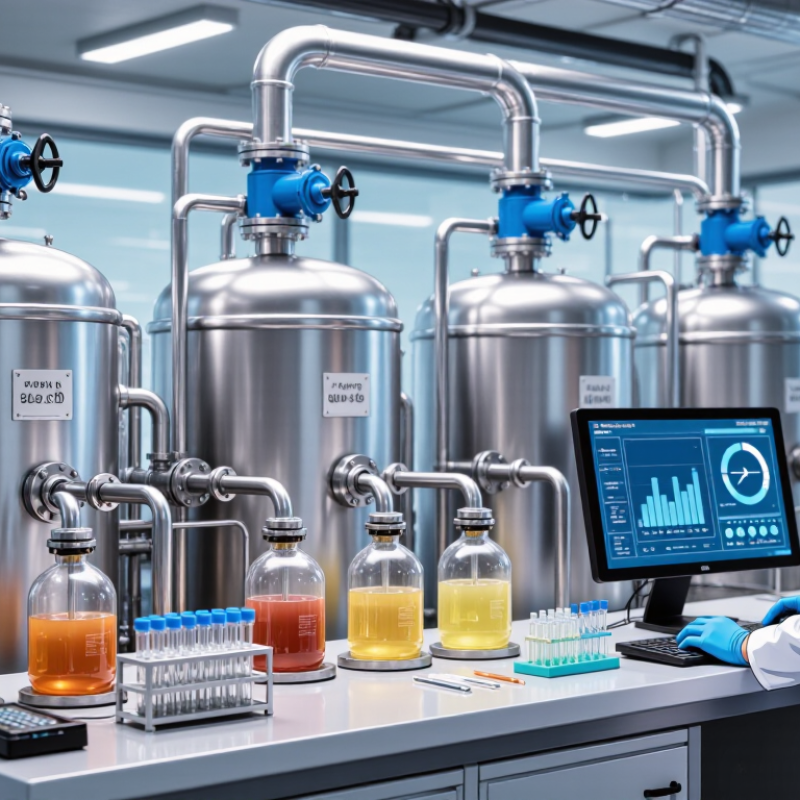
What Microbial Fermentation Suppliers Provide
Microbial fermentation suppliers provide more than production tanks. They may supply characterized microbial strains, culture media, and process-development support. A useful partner explains how temperature, oxygen, pH, and feed rates affect the desired output. These details matter. Small changes can alter growth, yield, or product consistency.
At pilot scale, suppliers can test recipes in controlled vessels before larger runs. They may monitor dissolved oxygen, acidity, foam, and biomass during fermentation. Some also help transfer a process between equipment sizes, where mixing and heat removal can behave differently. Ask what data they record and how they handle deviations. Clear batch records make results easier to assess.
Support can continue after fermentation. Suppliers may offer filtration, separation, concentration, drying, or analytical testing, depending on the product and facility. They can also explain sample handling, storage conditions, and quality documentation. Still, the handoff can be messy. A process that works in a small vessel may need adjustment at commercial scale, and a supplier’s standard package may not cover every need. Share realistic volume targets and quality requirements early, then check which services are included and which require separate arrangements.
10 Best Microbial Fermentation Suppliers Worldwide - What Microbial Fermentation Suppliers Provide
Supplier capabilities vary. The entries below describe ten common service and product areas in the microbial fermentation market; they are not named or ranked companies.
| No. | Supplier Capability Area | Typical Microbial Platform | What Suppliers May Provide | Common Applications |
|---|---|---|---|---|
| 1 | Contract fermentation and manufacturing | Bacteria, yeasts, or filamentous fungi | Project-specific fermentation runs, process scale-up, batch documentation, and sometimes downstream processing. | Ingredients, industrial products, research materials, and other customer-developed products. |
| 2 | Enzyme production | Selected bacteria, yeasts, and fungi | Microbial cultivation, enzyme recovery, concentration, and activity testing, depending on the product and process. | Food processing, detergents, textiles, pulp and paper, and bio-based manufacturing. |
| 3 | Organic acid fermentation | Acid-producing bacteria or fungi | Fermentation and product recovery for acids such as lactic acid, citric acid, or gluconic acid. | Food and beverage ingredients, chemical intermediates, and material production. |
| 4 | Amino acid and nutrient fermentation | Industrial bacterial strains and other selected microbes | Cultivation, separation, purification, and quality testing of fermentation-derived amino acids or nutrients. | Food, feed, nutrition, and pharmaceutical ingredient supply chains. |
| 5 | Vitamins and microbial metabolites | Product-specific bacteria, yeasts, or fungi | Controlled fermentation and recovery of selected vitamins or other microbial metabolites. | Food fortification, feed, supplements, and other ingredient markets, subject to applicable regulations. |
| 6 | Probiotic and live-culture production | Selected lactic acid bacteria, bifidobacteria, and yeasts | Culture propagation, harvesting, stabilization or drying, and viable-cell testing where offered. | Foods, dietary supplements, and animal nutrition products. |
| 7 | Precision fermentation | Engineered or selected microorganisms, including bacteria and yeasts | Strain and process development, fermentation, and recovery of a specified protein, enzyme, or other target molecule. | Food ingredients, industrial enzymes, and research or specialty products; regulatory requirements depend on use and market. |
| 8 | Biomass and single-cell protein | Yeasts, bacteria, or filamentous fungi | Microbial biomass cultivation, harvesting, drying, and compositional analysis. | Feed and food applications where the product and intended use meet relevant safety and regulatory requirements. |
| 9 | Biopesticide and agricultural microbial products | Selected bacteria, fungi, or bacterial spores | Microbial propagation, formulation, viability or potency testing, and batch production, depending on the product. | Agricultural biological products; registration and permitted claims vary by jurisdiction. |
| 10 | Fermentation media and process inputs | Inputs used with a range of microbial production systems | Nutrients and other process materials, such as carbon and nitrogen sources, trace nutrients, or formulated culture media. | Research, pilot-scale development, and commercial microbial fermentation processes. |
Note: Actual capabilities, production scale, certifications, product specifications, and regulatory status should be confirmed directly with each supplier.